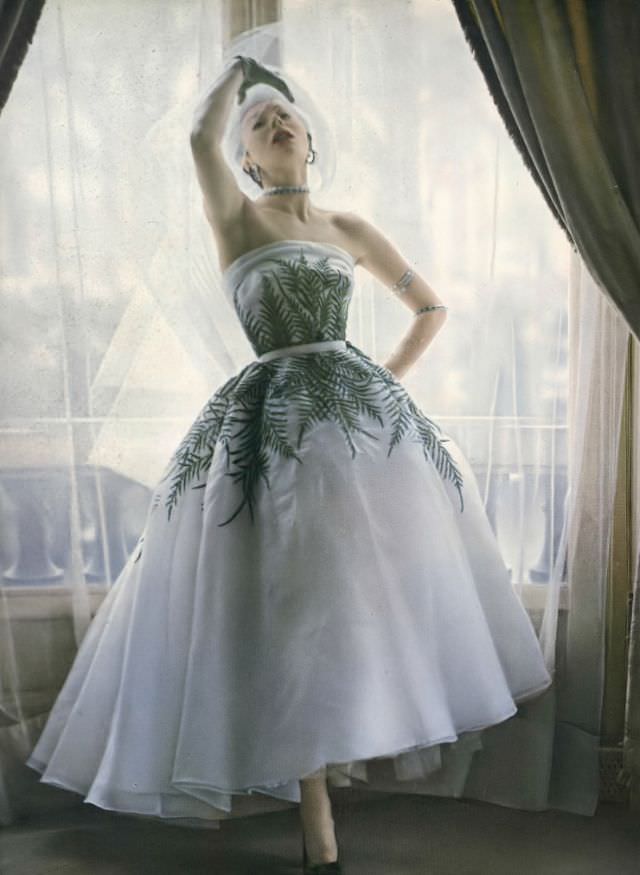
Framed against sheer curtains and a softly lit window, Bettina poses in a dramatic evening gown credited to Jacques Fath for Vogue in 1950. The strapless bodice and cinched waist create the iconic postwar silhouette, while a slim belt and a sparkling choker emphasize the clean line of the neckline. With one arm lifted and the other set at the hip, her stance turns the dress into architecture—poised, theatrical, and unmistakably haute couture.
Across the pale fabric, a fern leaf motif unfurls in dark, graceful fronds, concentrated at the bodice and sweeping down over the full skirt like shadowy botanical embroidery. The voluminous hem floats outward in layers, suggesting crisp taffeta or organza that catches the light and holds its sculpted shape. Accessories are kept minimal but strategic—bracelets, earrings, and gloves—letting the pattern and silhouette carry the visual story.
Fashion historians often read images like this as a meeting point of couture craftsmanship and mid-century editorial fantasy: nature translated into ornament, luxury presented as modern art. Jacques Fath’s design here balances softness and structure, offering a gown that feels both garden-inspired and rigorously tailored for the salon. As a piece of 1950 Vogue fashion culture, the photograph sells more than a dress—it sells an ideal of evening elegance, confidence, and postwar glamour.