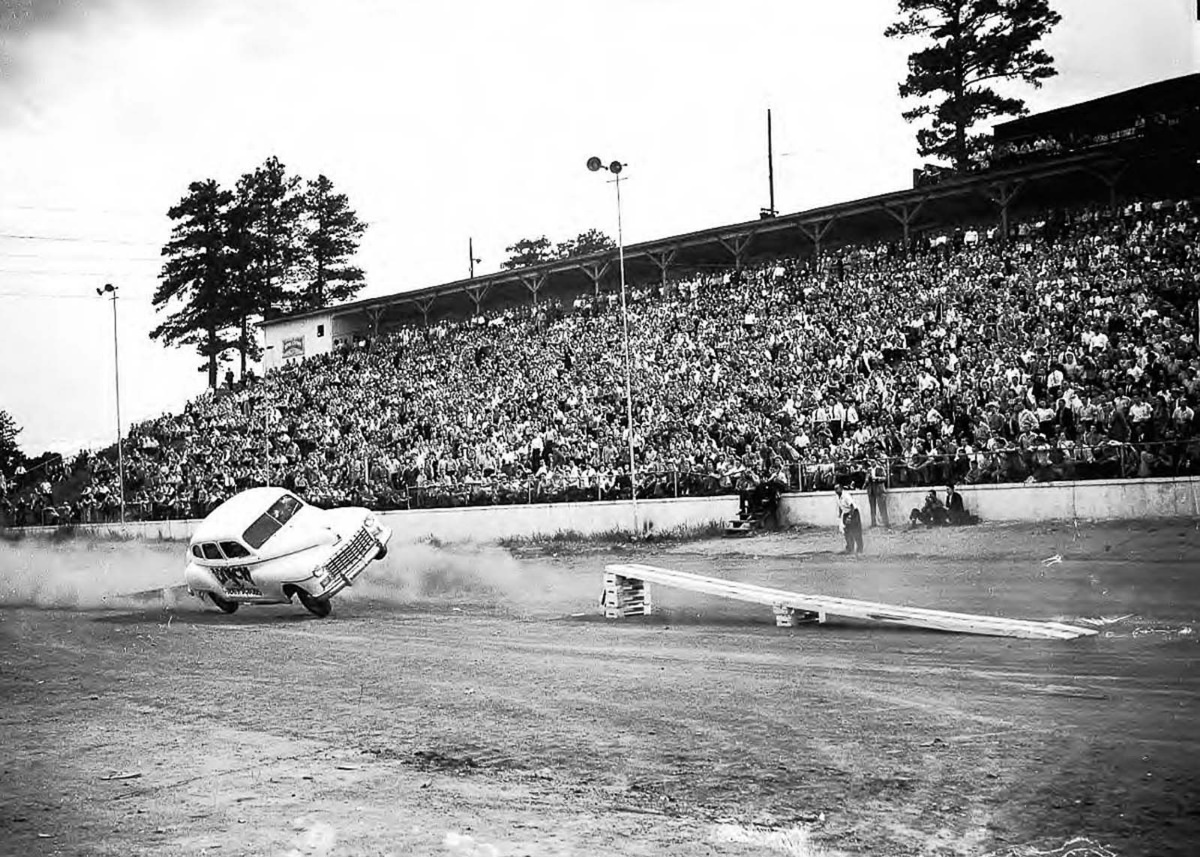
Dust hangs in the air as a sedan skids sideways, its body leaning hard while the driver wrestles for control on a dirt arena. A simple ramp sits in the foreground like a dare, and beyond it the grandstand is packed wall to wall with spectators, faces turned toward the chaos. The scene feels less like a conventional race and more like a carefully staged flirtation with disaster—exactly the kind of spectacle that made Jimmie Lynch and his “Death Dodgers” a crowd-drawing phenomenon in 1940s sports entertainment.
Stunt driving acts like this thrived on timing, teamwork, and nerves, using everyday cars as props in a show where crashes, near-misses, and dramatic recoveries were the main event. The photo hints at the format: a confined track, a barrier separating the public from the action, and a performance calibrated to be visible from the highest rows. In an era when fairgrounds and speedways doubled as community gathering places, these demolition-style thrills offered a loud, kinetic alternative to traditional motorsport.
What lingers most is the contrast between the massive, orderly crowd and the unruly motion on the track, a reminder of how risk was packaged as family entertainment in mid-century America. For readers searching vintage stunt driving, 1940s auto daredevils, or Jimmie Lynch’s Death Dodgers, this image captures the atmosphere—raw speed, roaring approval, and the uneasy knowledge that the next second could bring either a flawless save or a spectacular wreck. It’s a snapshot of when “sports” could mean controlled mayhem, sold with bravado and watched from the bleachers in breath-held silence.