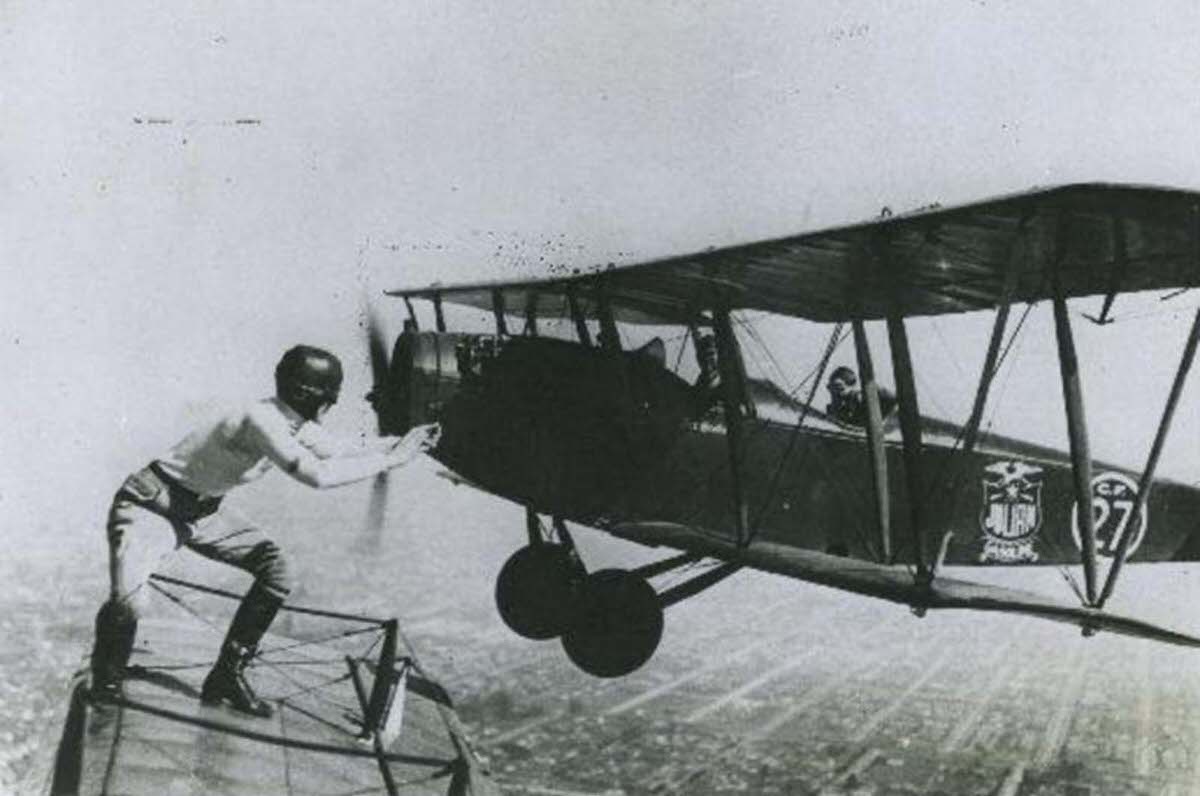
High above a patchwork landscape, Gladys Ingle balances on the edge of a moving biplane, one hand reaching toward the engine area while the pilot sits exposed in the open cockpit. The aircraft’s struts and wires form a stark lattice against the sky, emphasizing just how little separates the performer from open air. It’s an unforgettable snapshot of wing walking, when aviation was still new enough to feel like magic—and dangerous enough to prove it.
Wing walkers turned early airplanes into airborne stages, relying on grip strength, practiced timing, and sheer nerve as wind and vibration fought every movement. Ingle’s clothing and helmet suggest practical preparation rather than costume, hinting at the discipline behind the spectacle. The scene also underscores the teamwork involved: the pilot holds a steady line while the performer works outside the cockpit, turning flight into a public demonstration of control at the limits.
For readers searching for women in aviation history, barnstorming stunts, and the daring culture of early airshows, this photograph delivers both drama and detail. The angle, the visible rigging, and the proximity to the propeller capture the reality behind the legend—sport, performance, and risk fused into a single moment. Gladys Ingle’s presence on the wing stands as a reminder that the story of flight was shaped not only by inventors and pilots, but also by fearless performers who expanded what audiences believed was possible.