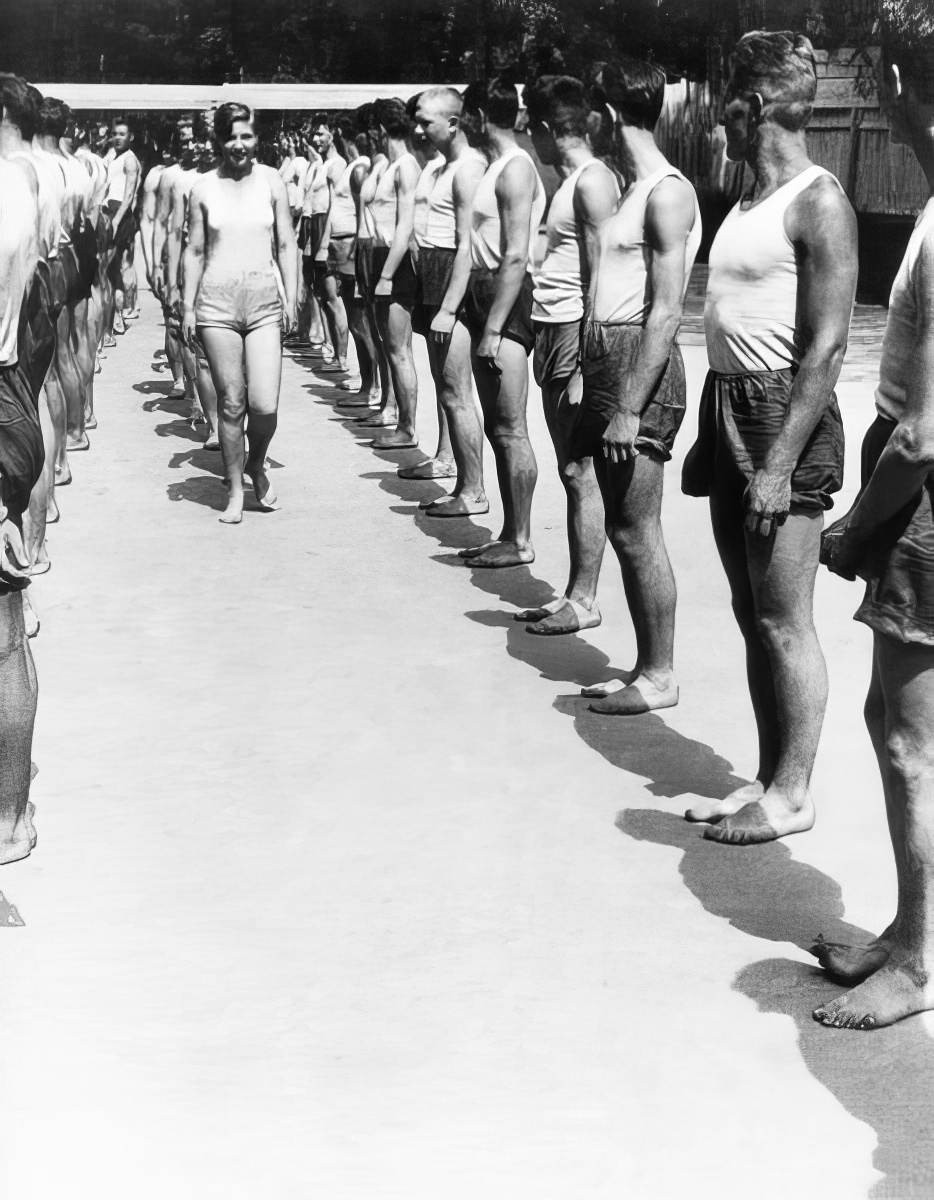
Sunlit and orderly, a long corridor of athletes stretches into the distance, their bodies forming two disciplined lines along an outdoor path. In the center, a young sportswoman in a simple training outfit steps forward with an easy confidence, drawing the eye amid the symmetry of bare legs, sleeveless tops, and soft athletic shoes. The composition feels almost ceremonial, turning an ordinary moment of preparation into a statement about fitness, unity, and attention to form.
In the 1930s Soviet imagination, sport was rarely just a pastime; it was a public language of strength and modernity. Group drills, synchronized movement, and standardized uniforms helped create a visual ideal of the “new” citizen—healthy, resilient, and ready for collective effort. Seen through that lens, the presence of women in athletic settings speaks to how physical culture promoted endurance and discipline, while also placing female bodies at the center of propaganda-friendly images of progress.
Strong Bodies, Strong Will invites you to linger over the small details that make these vintage photos so compelling: the sharp shadows on the ground, the calm faces, and the quiet tension between individuality and the crowd. For readers searching for Soviet sports history, women’s physical culture, or 1930s-era vintage photography, this scene offers a vivid entry point. It’s a reminder that behind the slogans and spectacle were real people—training, waiting, and stepping forward into a carefully staged future.