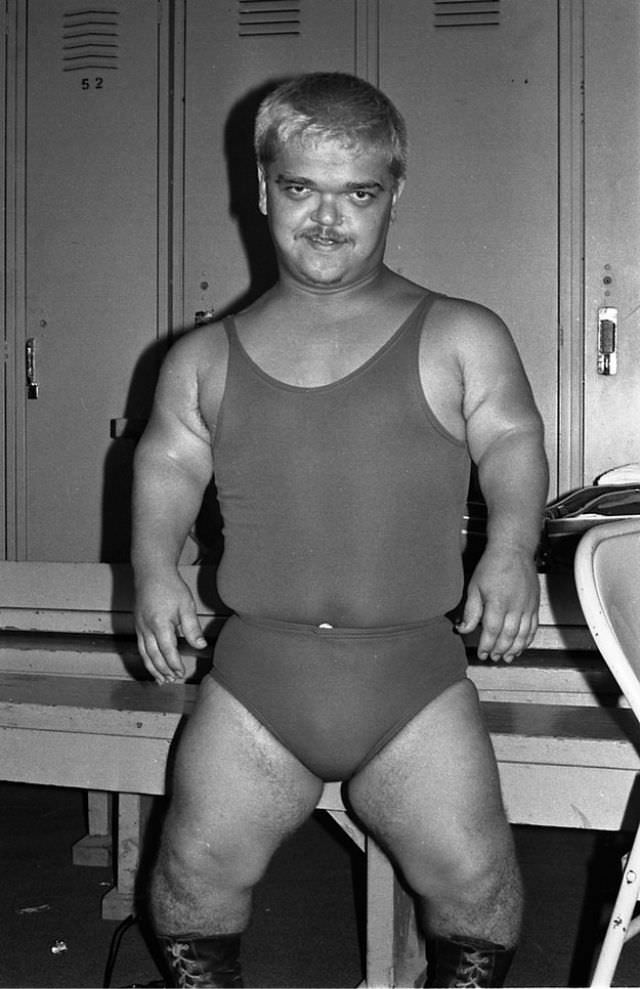
Locker-room light flattens the scene into stark contrasts as a compact, powerfully built athlete stands before a row of metal lockers, meeting the camera with a steady, slightly mischievous stare. The title’s nickname, “Little Bruiser,” feels earned in the broad shoulders and thick forearms, the kind of physique associated with the gritty, hands-on sports culture of the era. A simple singlet and high boots keep the focus on the body’s working strength rather than spectacle, while the utilitarian bench and scuffed floor hint at the routines that happen offstage.
Chicago in the early 1970s carried a reputation for hard-nosed competition, and this portrait fits neatly into that atmosphere of toughness and showmanship. Photographs like this often lived in the space between promotion and documentation—part intimidation, part personality—capturing how athletes presented themselves when the crowd wasn’t watching. Even without action in frame, the posture suggests readiness, as if the next moment could be a walk through a corridor toward the arena.
Dated September 1, 1972, the image offers a vivid slice of sports history for anyone researching wrestling-style presentation, mid-century locker-room aesthetics, or the visual language of strength in American cities. Details such as the numbered locker, the harsh overhead lighting, and the candid staging make it a valuable reference for historians and collectors of vintage sports photography. For readers searching “Little Bruiser Chicago 1972,” it’s a memorable reminder that some of the most revealing sports images are taken where the noise fades and the persona is assembled.