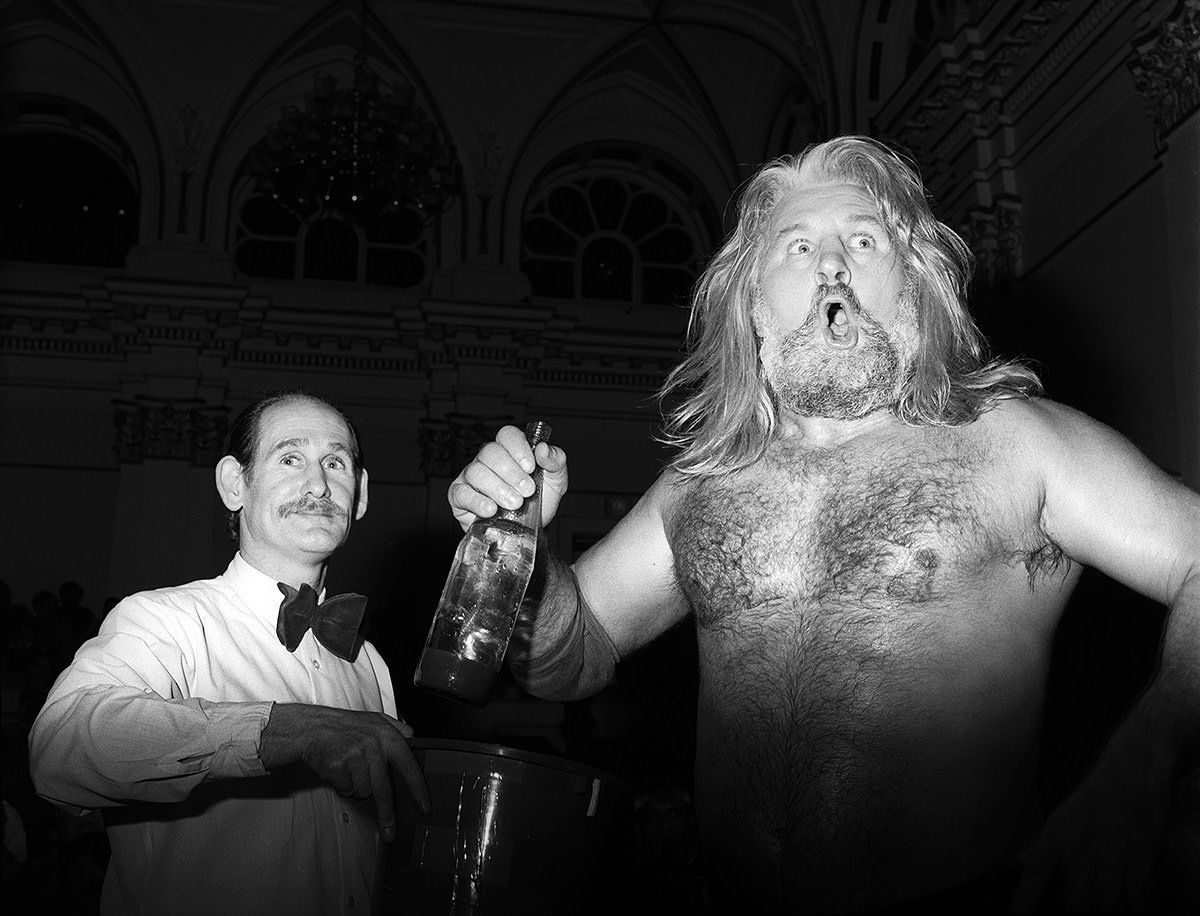
Under high, arched ceilings that hint at a grand indoor venue, two very different figures pose for the camera with the kind of theatrical confidence that defined classic pro wrestling. On the right, a towering, bare-chested strongman with wild hair and a booming expression hoists a bottle like a trophy; on the left, a neatly dressed man in a bow tie and moustache leans in, composed and watchful. The contrast feels deliberate—part spectacle, part sideshow, all performance.
The title, “Hollywood and Raslin Rasputin,” invites you to read the scene as a meeting of personas: one polished and presentable, the other untamed and intimidating. That tension was the engine of the sport’s storytelling, where character work mattered as much as strength, and a single staged moment could sell a rivalry to the back row. Even without a ring in view, the crowd energy is implied in the posture, the props, and the knowing play to the lens.
For readers interested in wrestling history—especially the flavor of British wrestling culture that thrived in the late twentieth century—this photo is a lively reminder of how entertainment and combat sports intertwined. It’s not just an action shot; it’s promotional theatre, the kind that filled local halls and made larger-than-life nicknames feel believable for one electrifying night. As an archival sports photograph, it captures the humor, bravado, and human craft behind the myth-making of the ring.