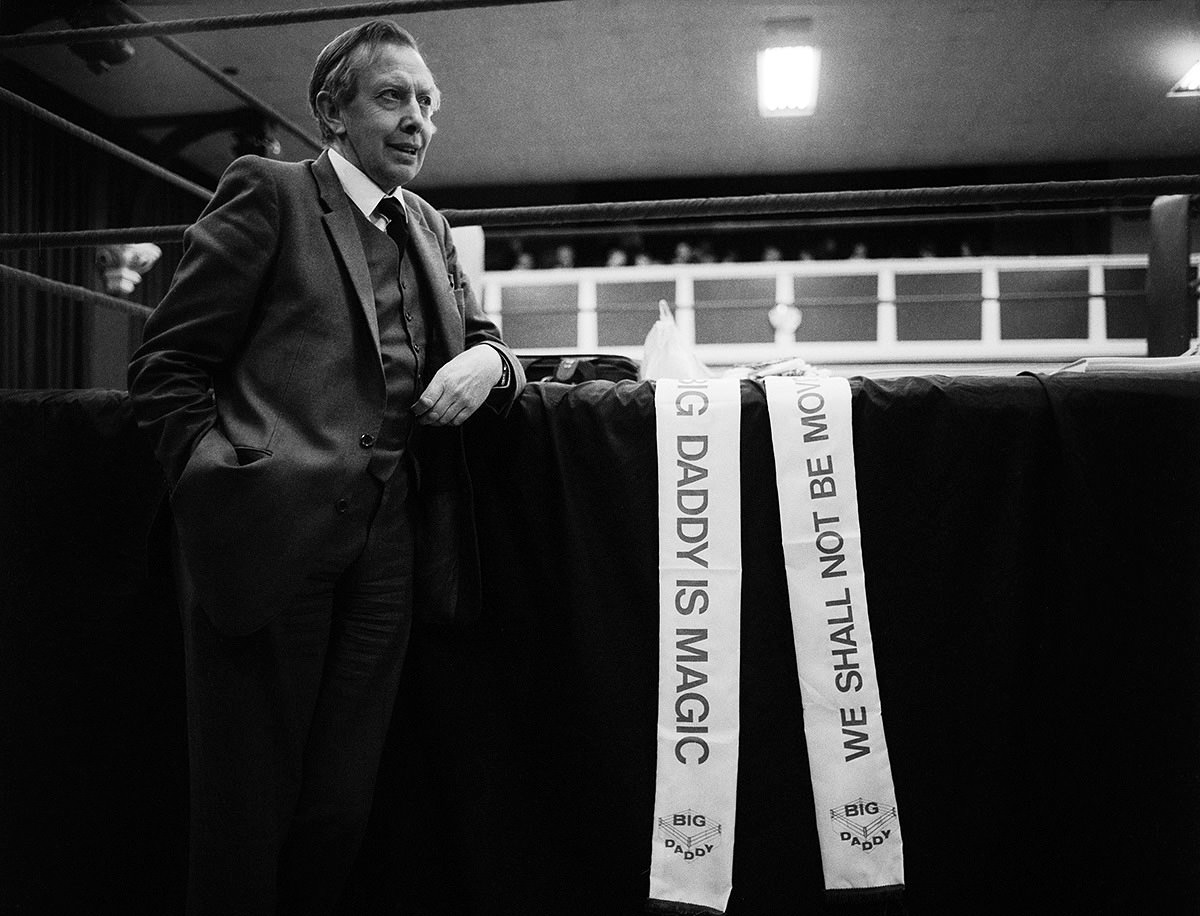
Leaning against the ring apron in a neat suit and tie, a veteran-looking figure watches the arena with the calm confidence of someone who has seen countless bouts unfold. The ropes, the dim hall lighting, and the sparsely detailed background evoke the intimate indoor venues where British wrestling often lived—close enough that every shout, gasp, and thud became part of the night’s entertainment.
Two long banners drape over the edge of the ring, their bold lettering—“BIG DADDY IS MAGIC” and “WE SHALL NOT BE MOVED”—hinting at the chants, loyalties, and larger-than-life personas that defined wrestling in 1980s England. Even without naming the individuals, the scene speaks to a period when grappling was a mainstream spectacle for many Britons, mixing sport, theatre, and working-class community spirit in a way that felt uniquely local.
Wrestling’s popularity in Britain has ebbed and flowed, but photos like this preserve the atmosphere that television highlights and match results can’t fully explain. From the formal dress around the ring to the unmistakable fan messaging, the image offers a doorway into the lost combat-sports culture that audiences once packed halls to enjoy—an era of heroes, hecklers, and hometown pride that still echoes in nostalgia today.