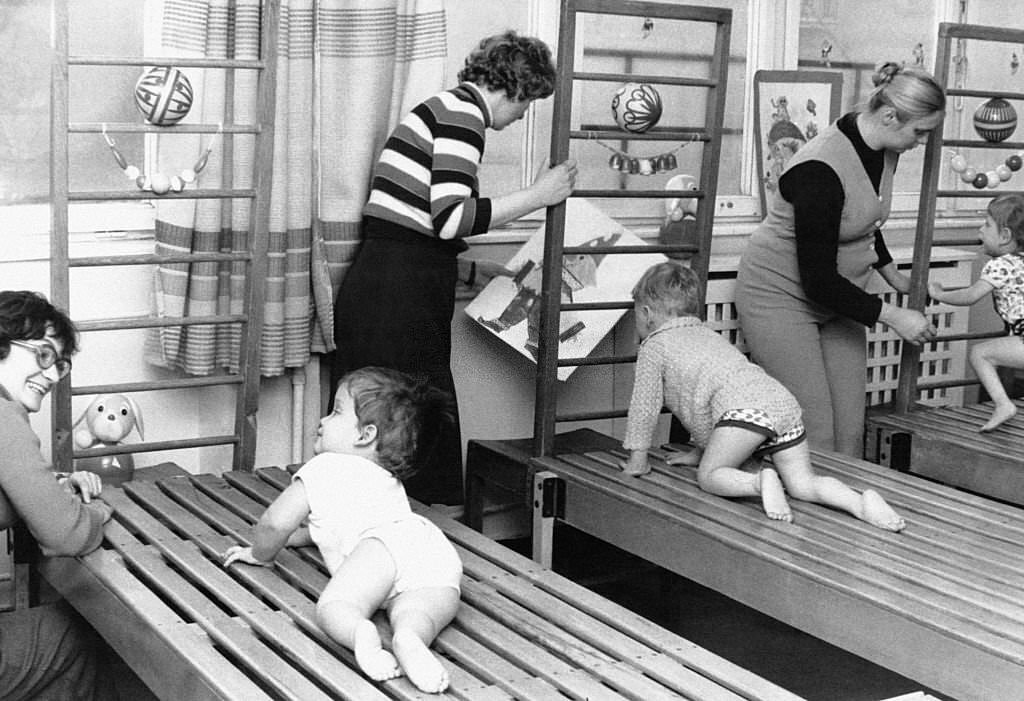
Beneath striped curtains and a wall of simple gym frames, mothers lean in as toddlers crawl, climb, and balance across slatted wooden platforms. The room is arranged like a miniature obstacle course, with low benches, ladder-like rails, and bright toys placed just out of easy reach to invite movement. Adults in practical clothing guide little hands and steady wobbly knees, turning ordinary play into a carefully observed lesson.
The title points to 1918, a period when child-rearing advice increasingly borrowed language from physical culture and early developmental science. Instead of treating exercise as something reserved for older children or athletes, this scene suggests a belief that motor skills could be encouraged from the very start—through repetition, posture, and structured environments. What might look odd today—babies “training” on wooden apparatus—reflects a growing confidence that bodies and habits could be shaped with methodical care.
For readers interested in weird exercise machines and workout methods from the past, this photograph offers a quieter, domestic counterpart: sports and fitness scaled down to the nursery. It’s a vivid snapshot of early twentieth-century parenting, where supervision, routine, and play merged into a kind of classroom for crawling, grasping, and coordination. The result is both tender and striking—an intimate look at how communities once taught the fundamentals of movement long before modern “tummy time” and motor development milestones became common terms.