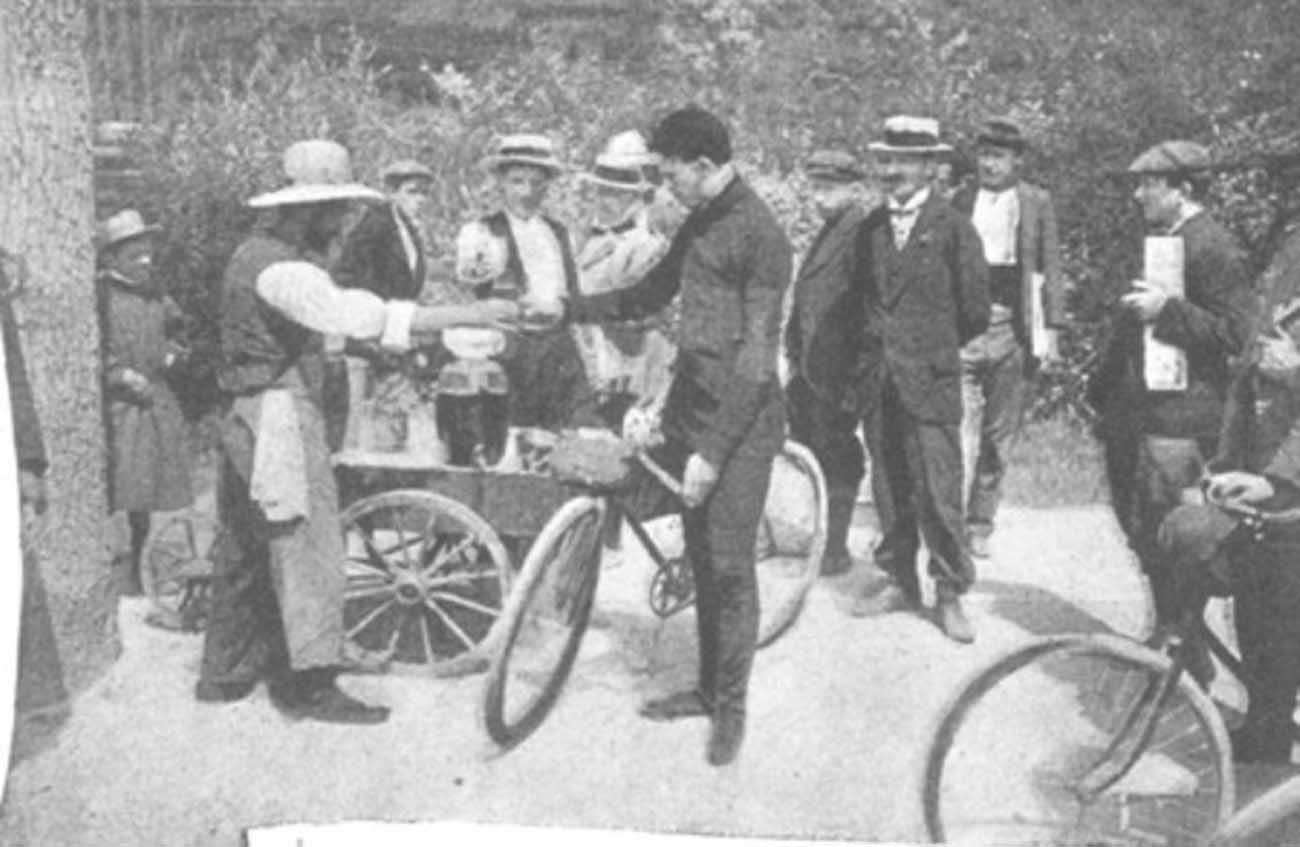
At a roadside feeding zone, the early Tour de France appears less like a polished spectacle and more like a traveling test of nerve and endurance. A rider pauses beside a small cart while onlookers in hats and dark jackets gather close, turning the simple act of taking refreshment into a public moment. The scene has the rough intimacy of long-distance cycling’s beginnings, when support came from whatever could be carried to the road’s edge.
The “ancient bidon” of the title feels earned here—sturdy, utilitarian, and handed over with the seriousness of essential equipment rather than a modern accessory. Instead of team cars and soigneurs, there’s a makeshift station: containers, hands ready to pass a drink, and a brief halt measured against the relentless miles still ahead. Details like the sparse gear and upright posture of the bicycle speak to an era when riders managed their own problems and every stop cost precious time.
Placed within the story of the first Tour de France in 1903, this historical photo highlights the everyday logistics that shaped the race as much as the climbs and finish lines did. It’s a reminder that cycling history is built on these small exchanges—water, food, and a few seconds of human contact—before the rider pushes back into the dust. For anyone searching the roots of Tour de France tradition, the feeding zone and its humble bidon offer a vivid, SEO-friendly window into early sports culture and endurance racing.