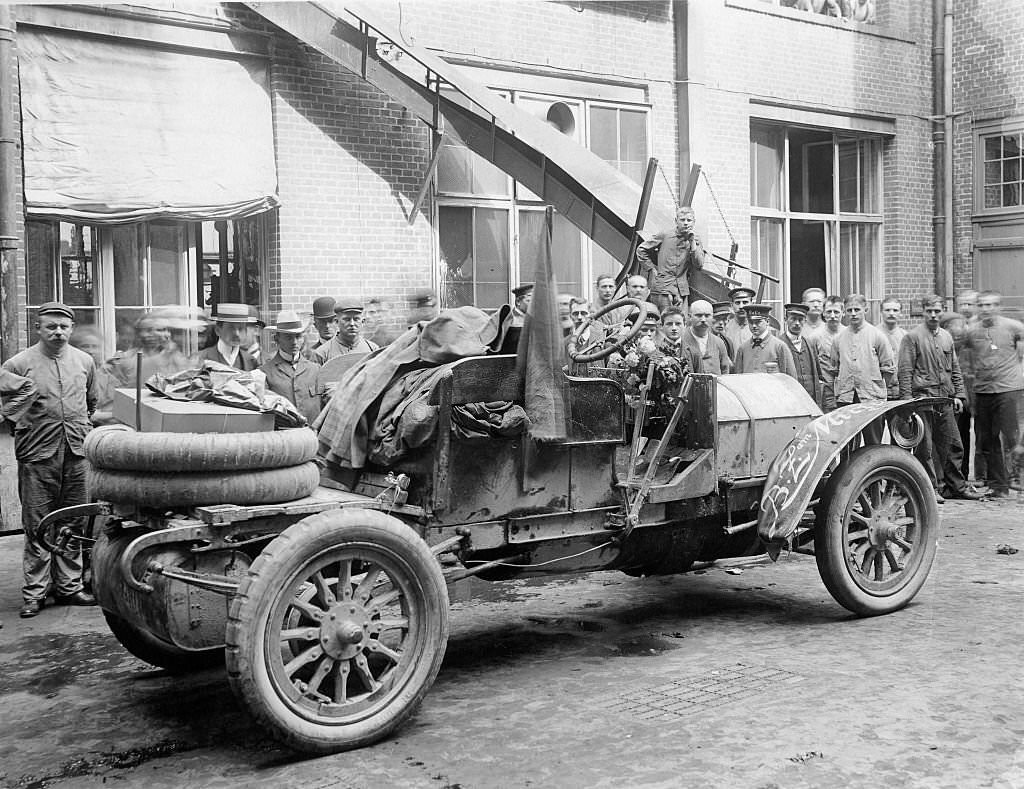
Crowded into the courtyard of the Ullstein house in Berlin, a ring of onlookers presses close to the Protos racing car, studying it with the kind of attention usually reserved for stage performers. The machine sits low and purposeful, its exposed controls and spoked wheels plainly visible, while bundles, tarps, and spare tires are lashed on like essential survival gear. Workmen in caps and shirtsleeves frame the scene, turning a media-yard backdrop of brick walls, tall windows, and metal stairs into an impromptu grandstand.
Details on the body hint at hard miles: a dented, dust-coated finish, scuffed fenders, and the practical clutter of equipment packed for the road. The open cockpit and upright steering wheel emphasize how raw early motoring was—no enclosed comfort, just mechanics, grit, and the driver’s nerve. Even without motion, the photo conveys the energy of a racing stopover, when the car itself became a public spectacle and a point of pride.
As part of the broader story of the Great New York to Paris Auto Race, this Berlin moment underscores how international the fascination with endurance motoring had already become. The gathering around the Protos reads like a snapshot of modernity arriving in real time: spectators, workers, and press culture meeting a bold piece of engineering in the heart of a publishing courtyard. For readers searching for early automobile history, Protos race car photos, or Berlin’s connection to pioneering motorsport, the image offers a vivid window into the era’s ambition and wonder.