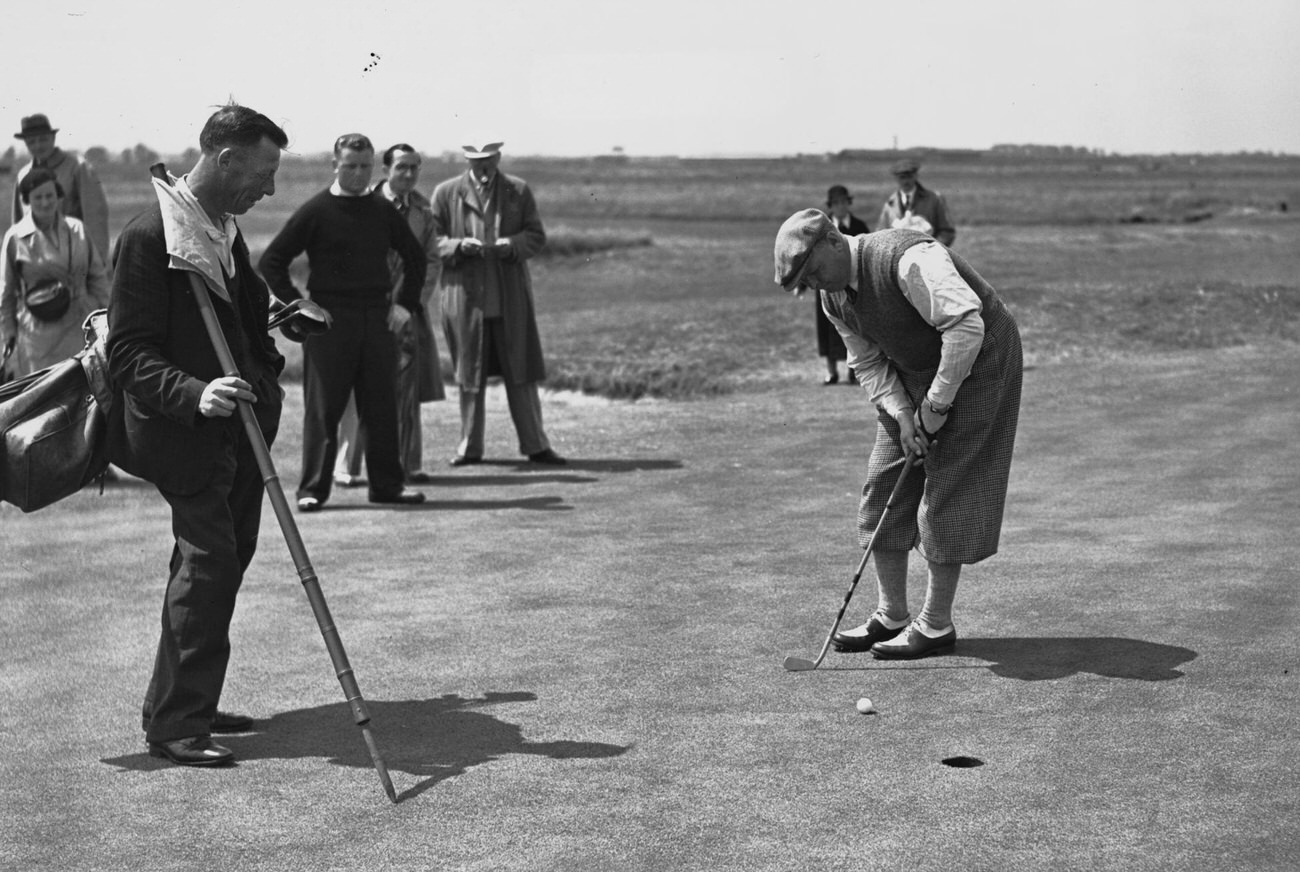
Alfred Perry bends over his putter with the practiced stillness golfers know well, eyes fixed on the short roll toward the cup. On the edge of the green, a caddie stands ready with a bag slung at his side, while a small group of spectators holds a respectful distance, watching the moment with quiet expectation. The open course stretches behind them, a broad sweep of fair ground that emphasizes how public—and how personal—this single stroke can be.
Clothing details place the scene firmly in an earlier era of the sport: caps pulled low, tailored jackets, sturdy shoes, and spectators dressed for an outing as much as a match. The composition captures golf’s social theatre, where even a modest putt becomes a shared event, measured in glances and posture. It’s a candid reminder that the putting green has long been a stage for etiquette, concentration, and the subtle pressure of being observed.
For readers drawn to historical golf photography, this post offers more than a sports snapshot—it preserves a texture of time, from the caddie’s attentive stance to the onlookers’ patient stillness. The title’s focus on Alfred Perry putting on the green, with spectators, highlights the human drama at the heart of golf history: technique meeting nerves, tradition meeting community. As part of a wider look at early 20th-century golf culture, the image invites you to linger over the small rituals that made the game feel timeless.