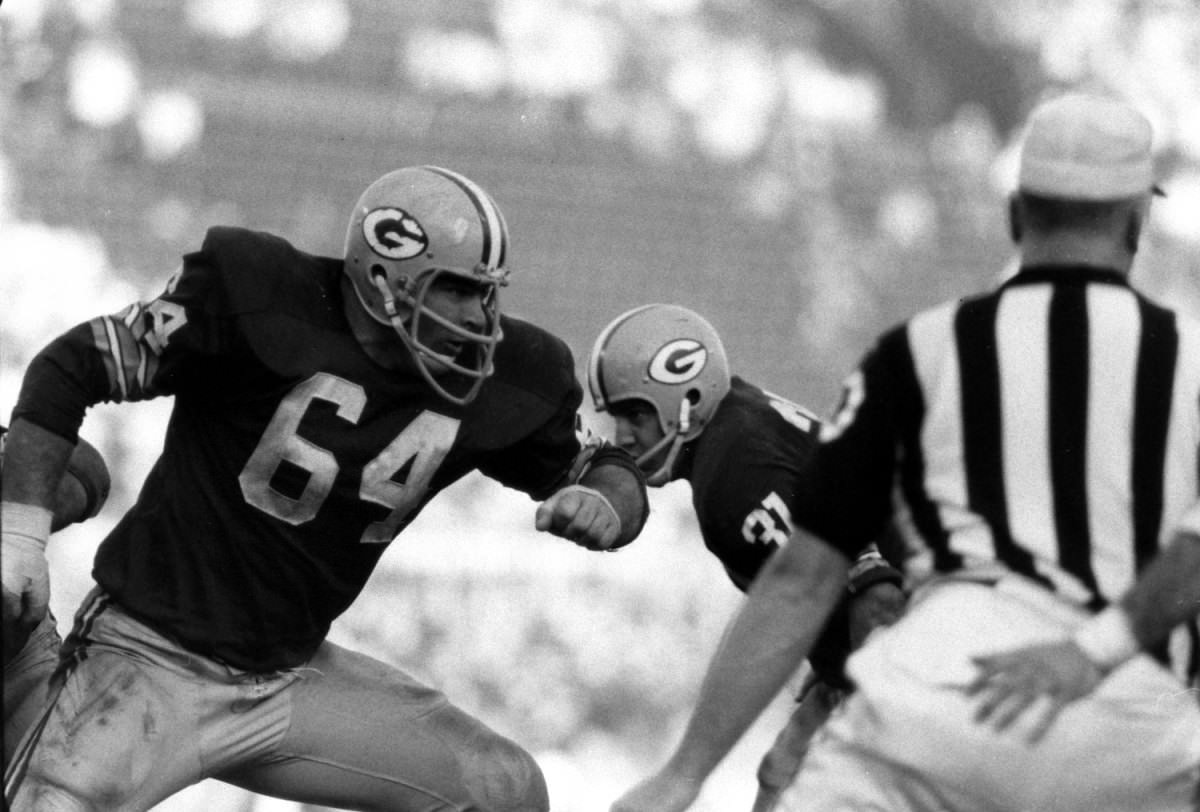
Jerry Kramer looms in the foreground with “64” stretched across his jersey, coiled low behind a facemask as the Green Bay “G” flashes on his helmet. The angle emphasizes what offensive line play really is—power, leverage, and timing—while a teammate to his right crouches into the same tense pre-snap posture. A striped official stands slightly out of focus, a reminder that this is not practice or a posed portrait, but football’s biggest stage taking shape in real time.
Super Bowl I in 1967 wasn’t just another championship; it was a hinge moment when two leagues, two styles, and a rapidly growing television audience met under one banner. In a single frame, the sport’s earlier era comes through: thicker pads, simpler gear, and a more direct, bruising aesthetic where the line of scrimmage felt like the center of the universe. The photo’s grain and shallow depth of field pull you toward the trench, where games were decided long before any highlight run or deep pass.
The title’s sting—Kramer’s greatness paired with the puzzling absence of a Pro Football Hall of Fame induction—adds a layer of debate to the nostalgia. Linemen rarely receive the easy acclaim, yet moments like this underline how dynasties are built: with veterans who win inches, absorb contact, and make the complicated look routine. For fans searching for Green Bay Packers history, Jerry Kramer, and Super Bowl I memories, this image is a compact argument for why the men in the middle deserve to be remembered as loudly as the stars they protected.