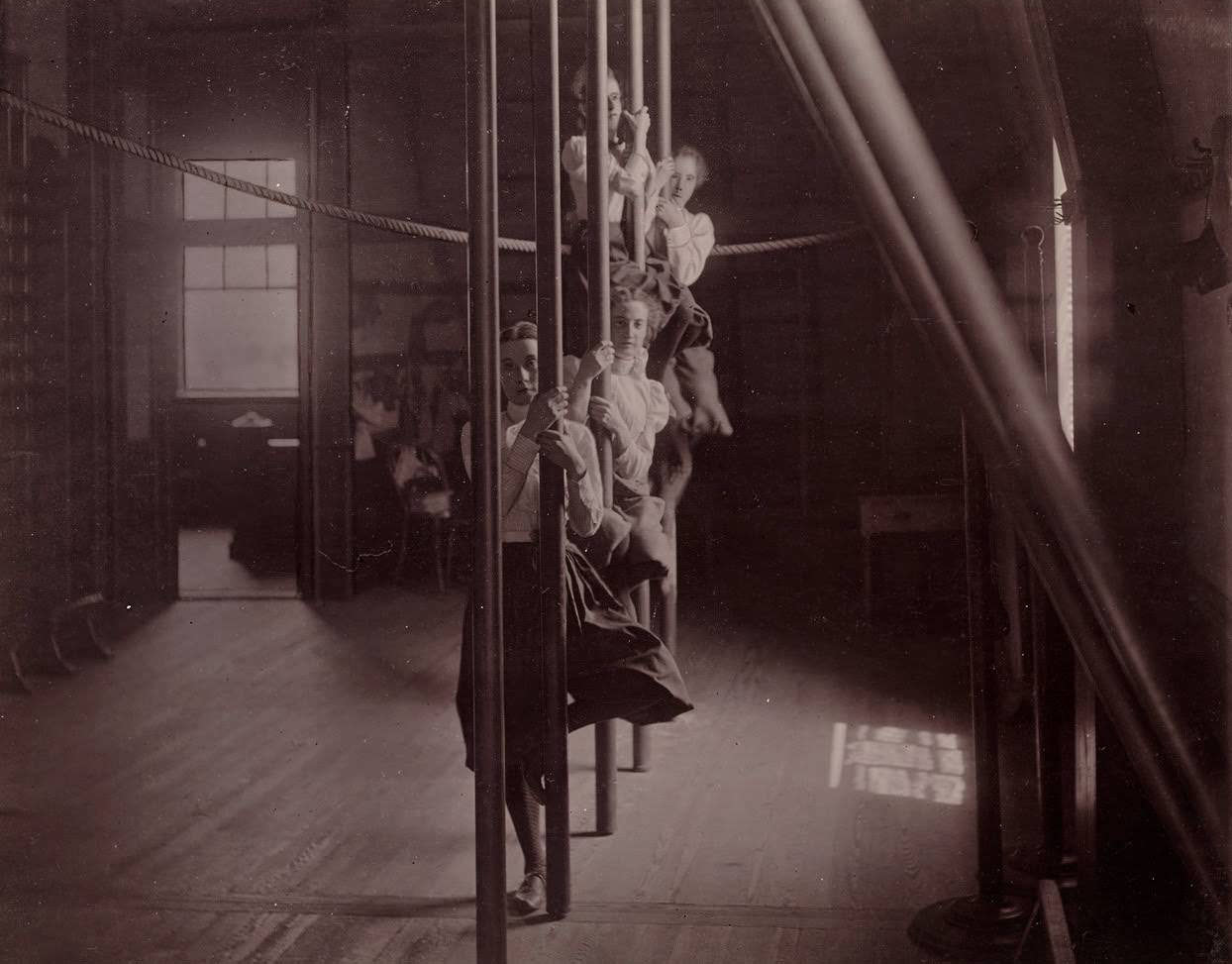
Light from tall windows falls across the wooden floor of a Charlestown High School gymnasium as a line of students grips a set of climbing poles. Their long skirts and high-collared blouses, so typical of the 1890s, move against the straight verticals of the apparatus, underscoring how formal everyday dress once met the demands of physical training. The scene feels staged yet lively, a moment when strength, balance, and a bit of daring become part of the school day.
Seen through the lens of Boston’s late-19th-century sports culture, the photograph hints at changing ideas about girls’ athletics and education. Gymnastics here is not entertainment but instruction—controlled posture, coordinated movement, and disciplined effort—suggesting a curriculum that treated the body as something to be trained alongside the mind. Even the sparse equipment and simple interior speak to an era when organized school sports were still finding their place.
For readers interested in historic Boston schools, women’s sports history, or the evolution of physical education, this 1893 view offers a vivid reference point. It preserves the textures of a working gym space—ropes, poles, open floor, and daylight—while capturing the social expectations written into clothing and classroom order. Charlestown High School’s gymnastics lesson becomes a window into how young women navigated modernity one careful climb at a time.