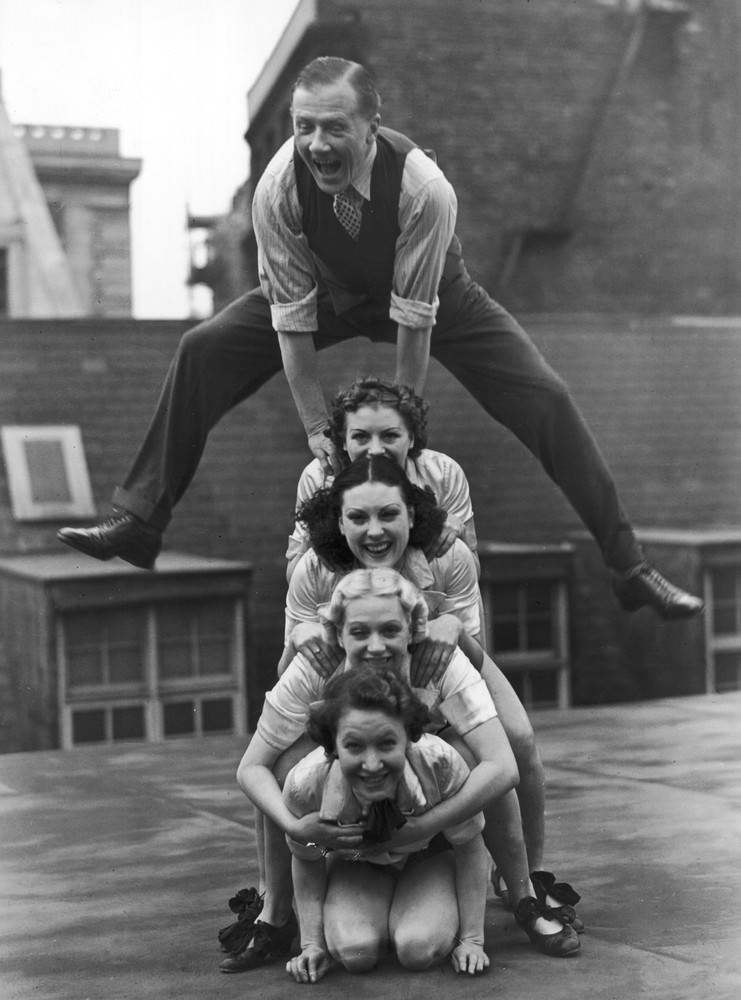
Perched high above the street on the roof of the Holborn Empire in 1938, British dancer Jack Payne turns rehearsal into spectacle, grinning as he vaults over his troupe in a perfectly timed leapfrog formation. Sleeves rolled, tie tucked, and shoes planted mid-air, he reads as both ringleader and showman—selling the energy of the routine even in a still frame. Beneath him, the performers stack in a playful human pyramid, their expressions mixing strain, laughter, and the confidence of practiced timing.
Rooftop rehearsals like this hint at the practical realities of variety entertainment, where dance troupes needed space, stamina, and relentless repetition to make choreography look effortless on stage. The “Manhattan Six” name nods to the era’s fascination with transatlantic style and urban modernity, while the crisp outfits and athletic pose underline how closely dance and sport could overlap in popular culture. Even without a theatre audience present, the image feels staged for the camera—publicity-ready, dynamic, and decidedly upbeat.
Behind the humor of leapfrog is a portrait of discipline: balance, trust, and teamwork, all captured against brick walls and skylines that place the performers firmly in the working world of 1930s entertainment. For anyone searching for vintage dance photos, British theatre history, or the glamour of pre-war performance culture, this rehearsal shot offers a vivid slice of life. It’s a reminder that the biggest moments onstage were built in overlooked spaces—sometimes on a rooftop, with laughter echoing between the chimneys.