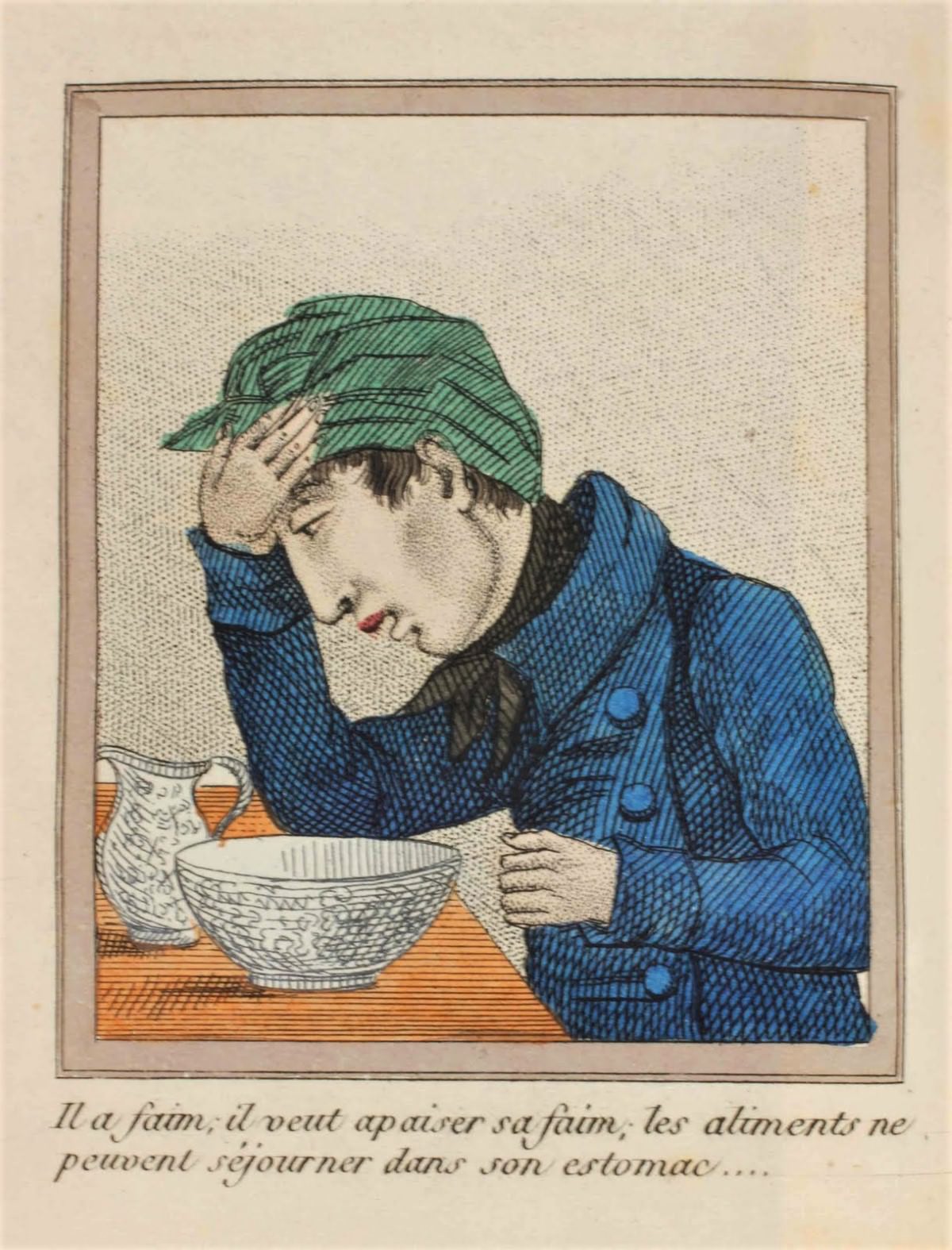
A weary figure in a blue coat slumps over a plain wooden table, one hand pressed to his forehead as if trying to steady a spinning world. In front of him sit a patterned bowl and a small jug, modest utensils that should promise comfort, yet his downcast gaze and tight mouth suggest anything but relief. The scene is carefully colored and crosshatched, turning a simple moment of mealtime into a quiet study of pain.
The title, “He is hungry and wants to eat; but no food will stay in his stomach,” frames the illustration as more than everyday fatigue, hinting at illness, nausea, or chronic digestive distress. Beneath the image, the French caption echoes the same idea, reinforcing that this was meant to be read as well as seen—an artwork that communicates bodily suffering with direct, almost clinical plainness. Such printed images often circulated as moral lessons, health references, or social commentary, making private misery visible to a wider audience.
What lingers is the tension between appetite and incapacity: the bowl is ready, the body is not. The limited setting—no bustling kitchen, no family around—intensifies the isolation, drawing attention to the universal fear of being unable to take in what one needs. For readers searching historical artwork about hunger, sickness, and everyday life, this piece offers a poignant, human-scale glimpse into how earlier eras pictured the fragile boundary between nourishment and hardship.