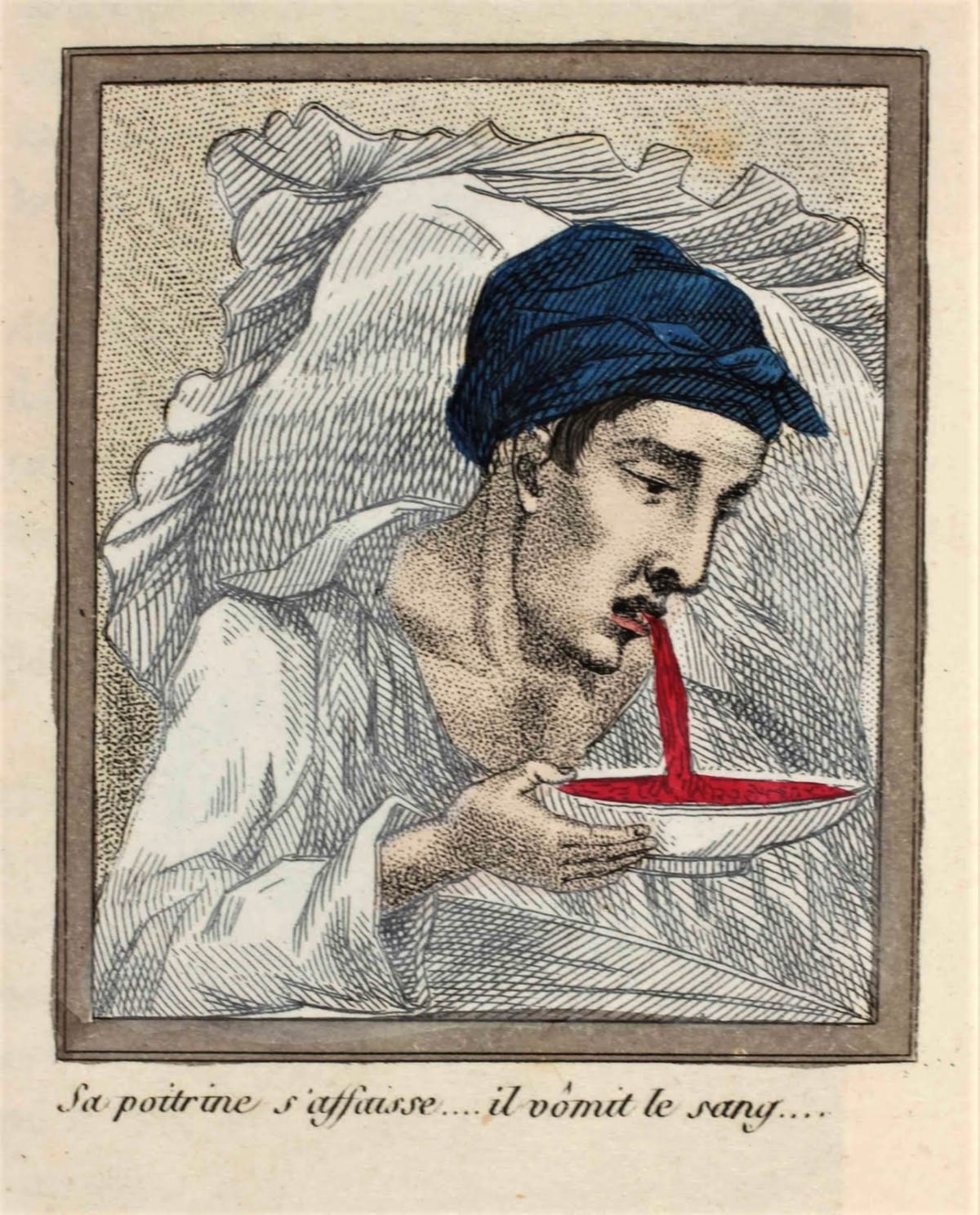
A gaunt man in a dark cap lies propped on rumpled bedding, his face turned down toward a shallow bowl he grips with unsteady hands. A vivid stream of red pours from his mouth, the only strong color in an otherwise muted, hatched illustration, forcing the viewer to linger on the body’s sudden betrayal. Beneath the scene, a French caption reads, “Sa poitrine s’affaisse… il vomit le sang…,” echoing the post title’s visceral account of a chest that buckles and heaves.
Rendered with careful linework and selective hand-coloring, the artwork feels like more than drama—it reads as a document of suffering meant to be recognized, studied, and remembered. The tight framing, the pillow’s sharp folds, and the patient’s hollowed cheeks create an intimate bedside perspective, as if the viewer has been invited into a private crisis. In the history of medical imagery, such prints often balanced instruction and warning, translating symptoms into a visual language that could travel beyond the sickroom.
For modern readers searching for historical medical illustration, vomiting blood, or depictions of pain and illness in art, this image offers a stark entry point into how earlier eras pictured the limits of the human body. It is not a portrait of a known individual so much as a universal figure—anonymous, vulnerable, and held in place by nothing more than linens and a bowl. The result is an unsettling but compelling reminder that “artworks” can function as evidence, carrying past fears and bedside realities into the present day.