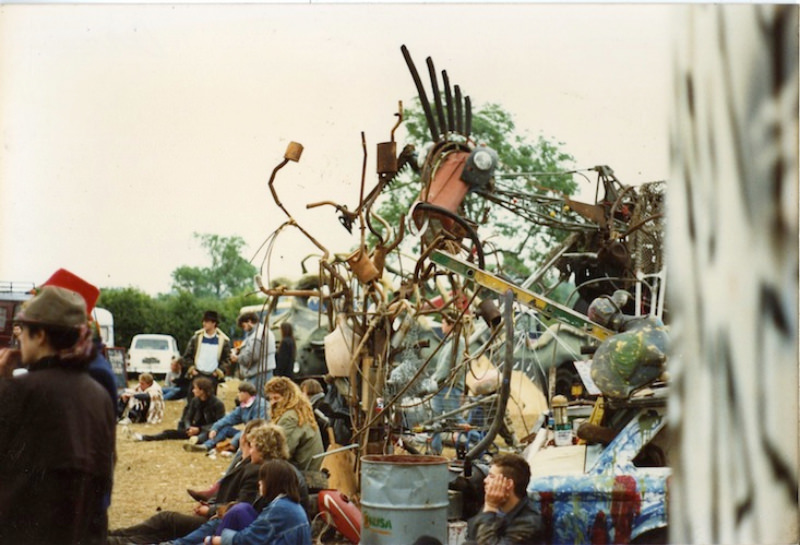
Against an open, overcast sky, a tangle of welded car parts rises like a mechanical thicket—pipes, cables, and metal arms branching out in every direction. The piece looks improvised yet deliberate, the kind of scrapyard sculpture that turns familiar automotive debris into something unsettlingly alive. In the background, people sit on the grass and watch, making the artwork feel less like a gallery object and more like a roadside apparition dropped into a public gathering.
Mutoid Waste Company’s 1980s aesthetic comes through in the collision of junk culture and performance-ready spectacle: battered panels, exposed framework, and odd attachments that read as both creature and machine. The absence of polish is the point, highlighting the raw textures of salvaged steel and the do-it-yourself engineering behind these bizarre artworks from scrapped cars. Even the surrounding clutter—drums, offcuts, and painted surfaces—adds to the sense of an evolving installation rather than a finished monument.
There’s an environmental subtext here that still lands today, as reclamation becomes rebellion and waste is recast as material for imagination. For readers searching for 1980s industrial art, post-apocalyptic sculpture, or Mutoid Waste Company car art, this photo offers a grounded look at how the movement lived in real spaces among real onlookers. It’s a reminder that the era’s most memorable art often emerged from the margins, built from what everyone else had thrown away.