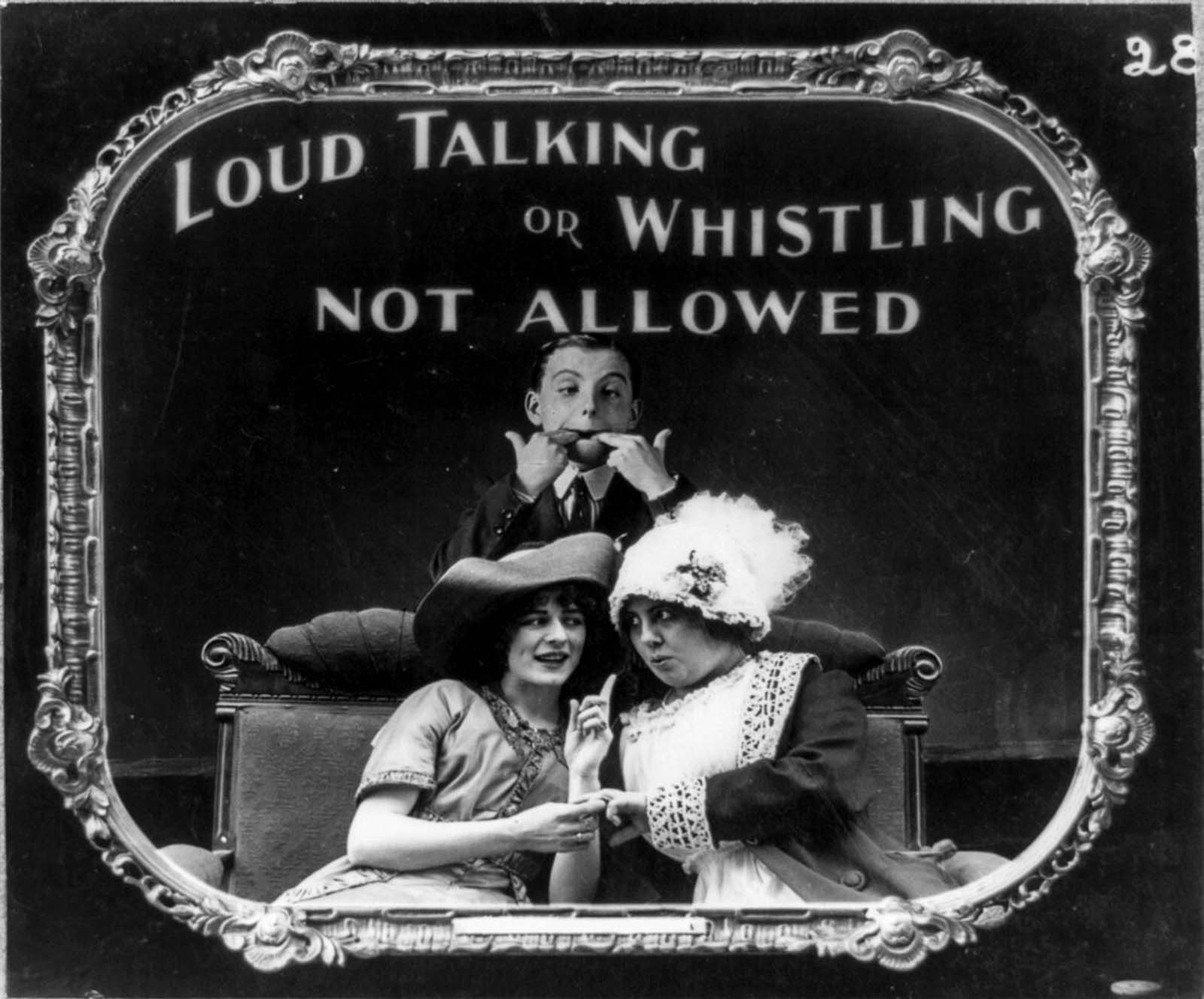
Looming above the seated crowd, a bold theater warning declares “LOUD TALKING OR WHISTLING NOT ALLOWED,” turning basic manners into a spectacle of its own. The staged scene below—two women leaning in to chat while a man makes a comically exaggerated face—feels like an early lesson in movie-house etiquette, framed as entertainment for the audience. In the 1910s world of silent films, where live music and intertitles carried the story, a little noise in the wrong moment could spoil the experience for everyone.
Early cinemas were still figuring out what “proper” behavior looked like in a new kind of public space, and exhibitors leaned on signs and house rules to keep order. That push for quiet wasn’t only about comfort; it was also about respectability, as movie theaters tried to present themselves as modern, family-friendly venues rather than rowdy nickel amusements. The ornate border and theatrical posing in this photo underline how even discipline could be dressed up with flair, humor, and a hint of moral instruction.
Bizarre rules and etiquette from the 1910s can sound strict today, yet they reveal how quickly filmgoing became a shared ritual with its own expectations. From policing chatter and whistling to reinforcing “appropriate” conduct in the seats, these reminders shaped the culture of Movies & TV long before soundtracks and surround sound. Use this historical image as a window into early cinema behavior—where silence was part of the show, and the audience was expected to perform good manners as carefully as the actors on screen.