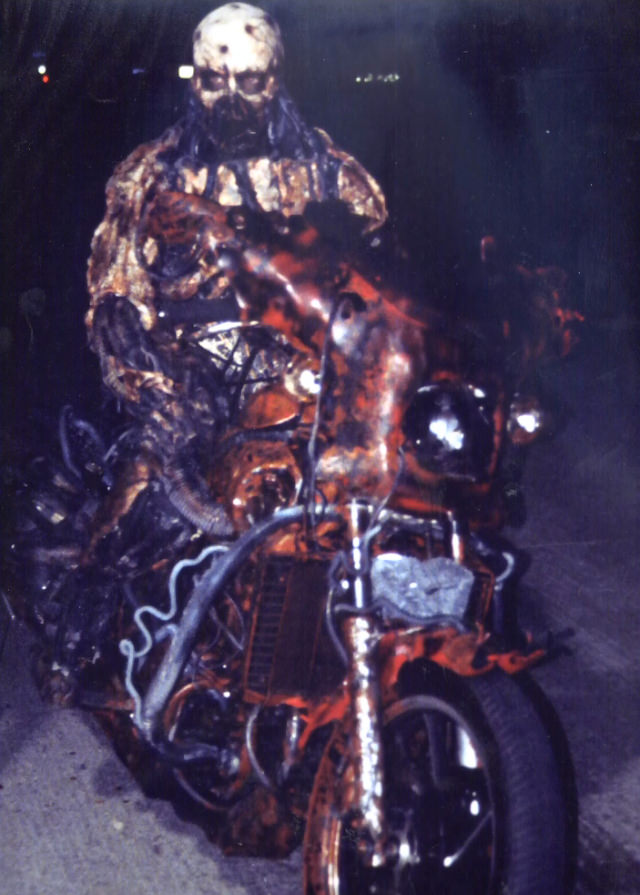
Under harsh set lighting, a heavily made-up horror figure looms over a battered motorcycle, its surfaces smeared with grime and streaked with what reads as stage blood. The creature-like face, scarred and pallid, feels designed for shock value, while the bike’s exposed lines and cluttered cables suggest a prop dressed to look abused by the story’s chaos. Even in this low-light, candid look, the composition screams late-1980s horror cinema—practical effects, texture, and theatrical menace.
Behind-the-scenes photos from the making of ‘A Nightmare on Elm Street 5: The Dream Child’ (1989) are especially fascinating because they reveal the craftsmanship that created the franchise’s dream-logic brutality. Here, the makeup and costume work appear layered and sticky, the kind of tactile illusion that reads differently when the camera isn’t cutting away or bathing everything in cinematic mood. It’s a reminder that the era’s scares were often built from paint, foam, rigs, and patient crew work rather than digital polish.
Fans of Nightmare on Elm Street and collectors of movie production stills will appreciate how this image bridges film history and genre nostalgia, spotlighting the nuts-and-bolts labor behind a memorable horror sequel. The atmosphere hints at a night shoot or a darkened stage, where props and performers could be reset, relit, and reimagined between takes. As a piece of Movies & TV ephemera, it’s a gritty snapshot of 1989 filmmaking—equal parts illusion, sweat, and spectacle.