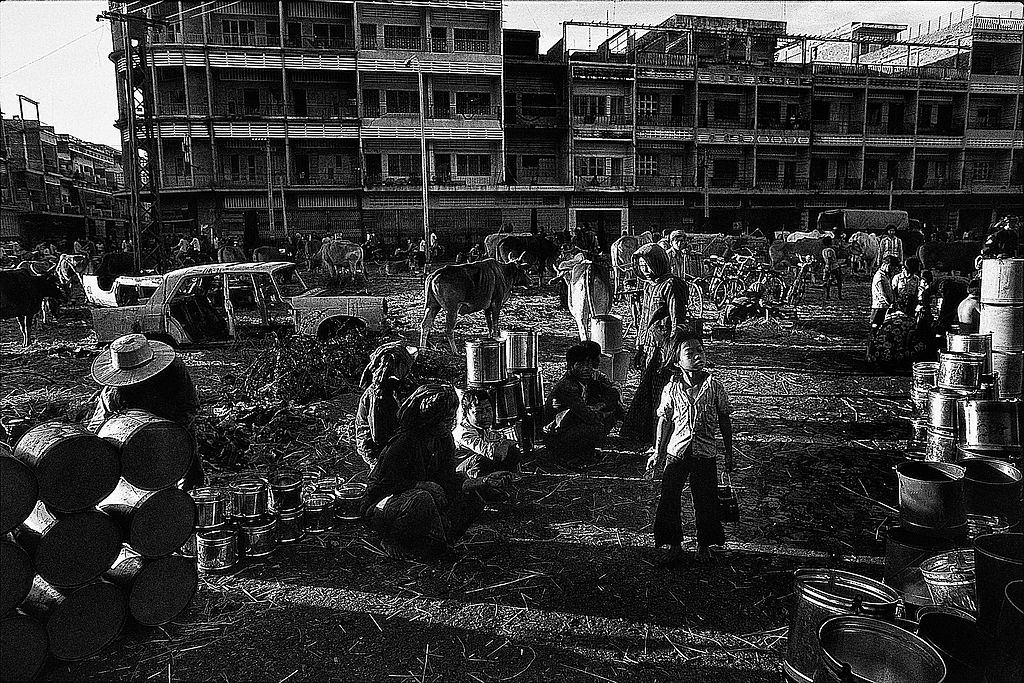
Across a littered open square in central Phnom Penh, families huddle beside stacks of metal pots and dented containers, turning an abandoned market edge into a makeshift refuge. A child stands in the foreground while adults crouch low, their attention divided between belongings and the uneasy quiet that follows upheaval. Behind them, shuttered multi-story buildings loom like emptied shells, their rigid balconies framing a city suddenly stripped of its normal rhythms.
The scene is crowded with the improvised logistics of survival: bicycles piled and leaning, bundles gathered close, and cattle moving through the space where commerce once flowed. A half-sunk car and scattered debris hint at hurried departures and disrupted streets, while the ground—strewn with straw and scraps—suggests temporary shelter rather than home. Even without visible gunfire, the atmosphere carries the mark of civil wars, where ordinary places become transit camps and every object is repurposed for endurance.
For readers searching the history of Cambodia and the Fall of Phnom Penh, this photograph offers a street-level view of dislocation rather than ceremony—people negotiating scarcity in the city center beside an abandoned market area. The composition emphasizes contrast: public architecture and private vulnerability, urban infrastructure and rural animals, movement and waiting. It’s a reminder that pivotal political moments are also lived as long hours on hard ground, with cooking pots, water vessels, and whatever can be carried forming the thin line between chaos and daily life.