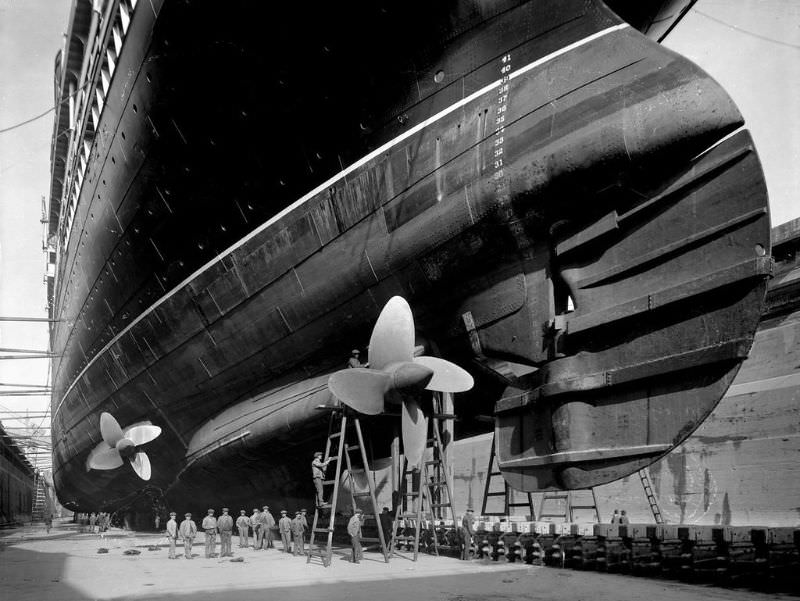
Towering above the floor of Gladstone Graving Dock, Aquitania’s port side dominates the frame, her dark hull curving upward like a cliff of steel. The stripped-back viewpoint draws the eye to the ship’s working anatomy—riveted plating, sea chests, and the stepped structure around the stern—details normally hidden once she is afloat. Scale is everything here: small clusters of dock workers gather beneath the overhang, turning the liner into a monument of early 20th-century engineering.
Near the center, a massive propeller sits poised for final checks, its pale blades catching the light against the shadowed underside of the ship. Ladders and staging lean into place, suggesting a hive of finishing work—inspection, cleaning, and adjustments—before the great vessel returns to the water. Even without motion, the composition conveys purpose and readiness, as if the dock itself were a workshop built to service ambition.
Set in Liverpool in May 1914, the scene belongs to a brief, confident moment in transatlantic travel when ocean liners promised speed, comfort, and national prestige. The title anchors this photograph to Aquitania’s preparation for her maiden voyage across the Atlantic, inviting readers to imagine the unseen bustle above: interiors being readied, systems tested, schedules fixed. For anyone interested in maritime history, shipbuilding, or Cunard-era ocean liners, this portside dock view preserves the practical, industrial side of a famous voyage about to begin.