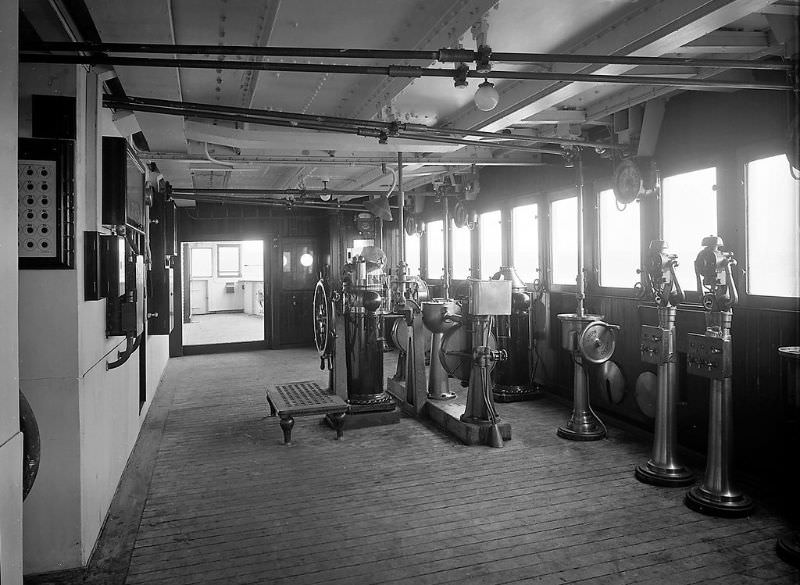
Step into the wheelhouse of Aquitania and the purpose of the space becomes instantly clear: every surface is built for navigation. A long row of windows floods the boat deck bridge with light, while sturdy timber decking and exposed overhead piping underscore the ship’s practical, engineered character. The view down the length of the navigating bridge hints at watchkeepers pacing, scanning the horizon, and moving between stations with practiced efficiency.
Along the starboard side, polished pedestals and control stands form a tidy lineup of maritime instruments, their dials and handles positioned for quick reach. The central cluster reads like a command core—equipment grouped where decisions were made and orders transmitted—while the surrounding cabinetry and panels suggest the hidden complexity of shipboard communication and power. Even without a crew present, the arrangement conveys how early 20th-century ocean liners balanced mechanical force with careful human oversight.
For readers drawn to nautical history, this Aquitania wheelhouse photograph offers a close look at the technology and design behind transatlantic travel’s golden age. It’s a study in “inventions” that were less about novelty than reliability: rugged fittings, clear sightlines, and an interior laid out to reduce error when weather, traffic, or darkness demanded precision. As a historical reference, the image helps anchor discussions of ship navigation, bridge architecture, and the everyday working environment that kept a great liner on course.