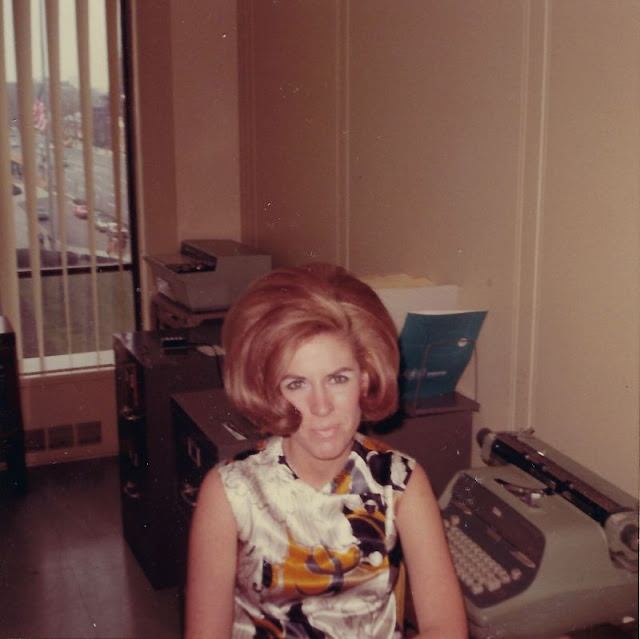
A poised office scene comes into view: a woman seated in front of a hefty typewriter, framed by vertical blinds and the subdued tones of an older workplace interior. Her carefully styled hair and patterned sleeveless dress set a mid-century mood, while the desk area hints at a busy day of correspondence and record-keeping. Even without a caption, the setting evokes that familiar rhythm of clerical work—keys clacking, paper feeding through, and pages stacking up to be filed.
Typewriters were once the heartbeat of business communication, turning spoken ideas into crisp, standardized text with a speed and permanence that earlier tools couldn’t match. Photos like this help tell the broader story of women in offices, where typing became both a sought-after skill and a gateway into paid professional roles. The machine itself—large, mechanical, and unapologetically practical—also reflects how “past inventions” shaped daily life long before laptops and touchscreens made writing nearly silent.
Details in the background deepen the atmosphere: office equipment clustered near the desk, a binder or folder set upright, and the suggestion of a city or neighborhood outside the window. For readers searching for historical photos of ladies using typewriters, this image offers a grounded glimpse into the era when technology meant gears, ribbons, and muscle memory. It’s a small, intimate reminder that progress wasn’t only built in laboratories—it was also typed out, line by line, in ordinary rooms like this one.