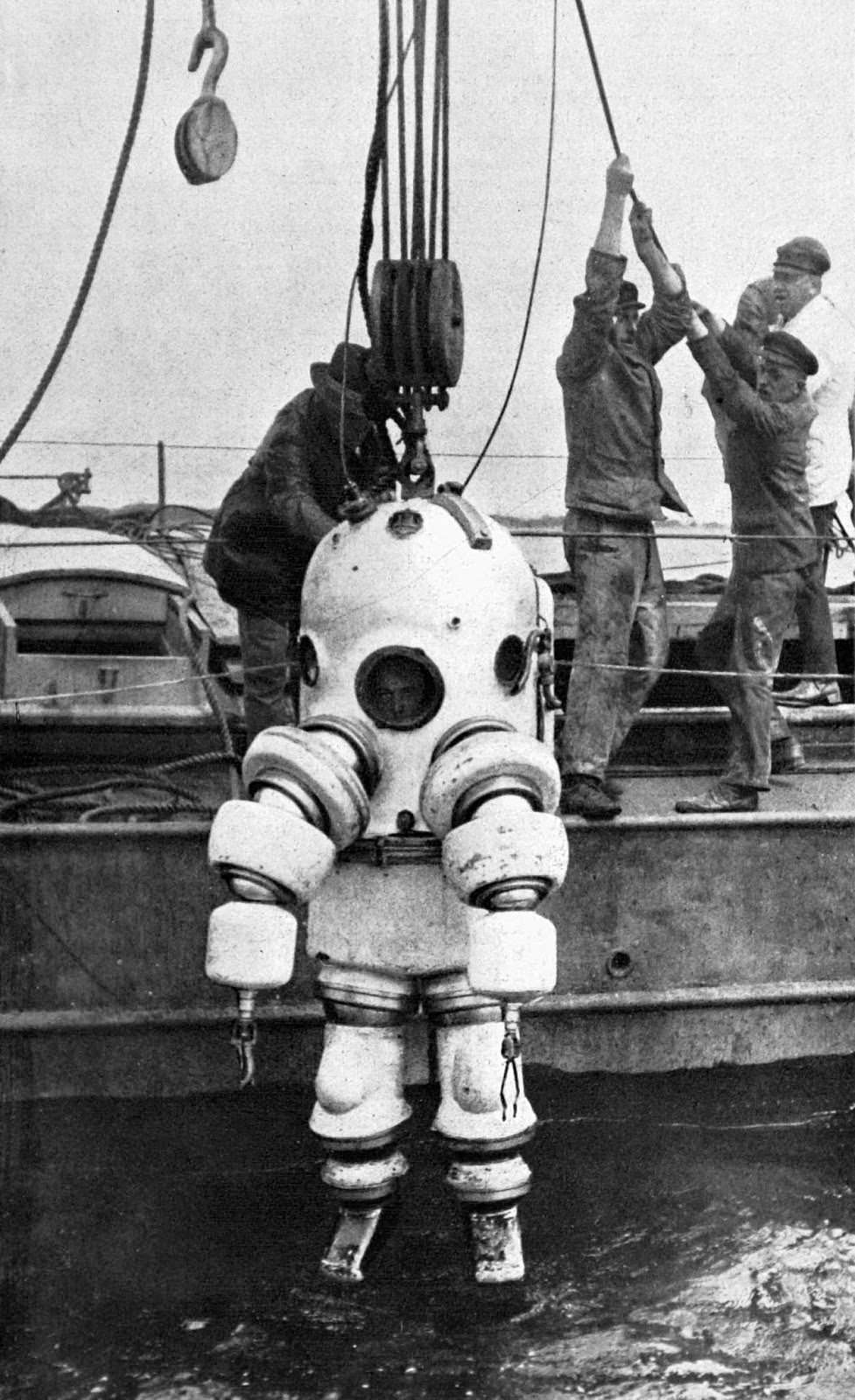
Suspended from a shipboard hoist, the bulbous metal diving suit known as the P-7 Neufeldt and Kuhnk hangs over the water like a piece of industrial sculpture. Its round helmet is punctuated by multiple portholes, while thick jointed arms and heavy boots hint at the weight and rigidity an early diver had to manage. Crewmen in work clothes steady lines and hardware on deck, turning the launch into a careful, choreographed test rather than a casual plunge.
France in 1926 was a fitting stage for such an experiment, when engineers and maritime crews were pushing equipment toward deeper, longer, and safer underwater work. The suit’s design reads like a response to real-world needs: visibility through reinforced windows, sealed joints for mobility, and a body built to withstand pressure while remaining controllable. Even without close-up detail, the arrangement of fittings and the methodical handling convey that this was serious technology meant for salvage, inspection, and other demanding tasks below the surface.
For readers interested in inventions and early underwater exploration, this historical photo offers a vivid look at how diving technology evolved between the age of canvas-and-brass gear and the later era of modern scuba. The scene balances human labor with machine ambition—ropes taut, metal gleaming, and the sea waiting just beneath. It’s a striking reminder that progress in maritime engineering often began with practical trials like this one, performed in plain view on a working deck.