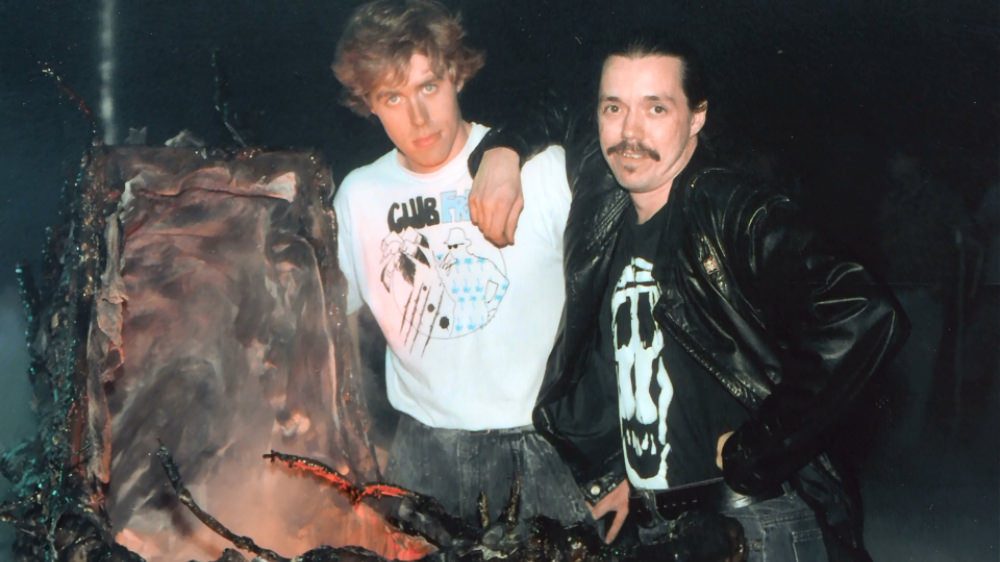
Leaning into the camera’s flash, two crew members pose beside a scorched, rubbery-looking prop wall—exactly the kind of nightmare texture that defines the practical-effects era of late-1980s horror. One wears a leather jacket over a bold graphic tee, the other a light sweatshirt with a large printed design, their casual outfits contrasting with the charred set piece at frame left. The dark, enclosed background and the singed edges suggest a stage space dressed to look dangerous, where heat, smoke, and grime were carefully controlled for the shot.
Behind-the-scenes photos from *A Nightmare on Elm Street 5: The Dream Child* (1989) offer a rare look at how the film’s unsettling dream imagery was built by hand—foam, paint, adhesives, and clever lighting rather than pixels. Here, the mood is less “horror movie” and more workshop pride, a snapshot of the people who helped make the franchise’s surreal scares feel physical and immediate. Even without a scene in motion, the burnt surfaces and warped textures hint at the production’s emphasis on tactile, in-camera illusion.
Collectors and fans of classic Movies & TV memorabilia will appreciate how an off-camera moment like this preserves the human side of horror filmmaking: a quick pause, an arm slung over a shoulder, and a grin beside the day’s handiwork. It’s a reminder that the world of Elm Street was assembled through long hours on set, where special effects and set dressing turned ordinary stages into dream logic made real. For anyone exploring 1980s horror history, this image is a small but vivid window into the craft behind the chills.