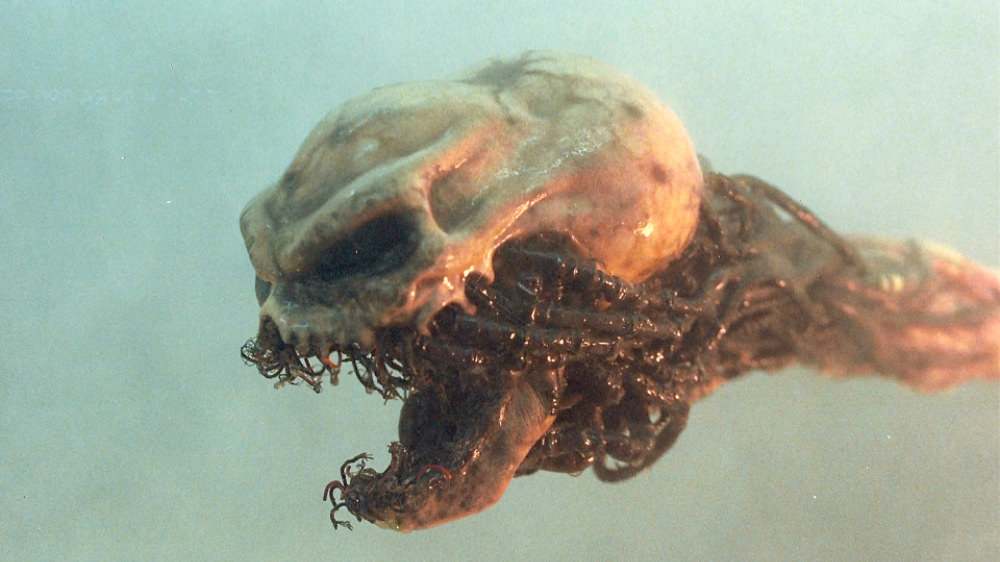
A pallid, skull-like creature hangs in a haze of studio smoke, its slick surface catching the light like wet latex. The gaping mouth and wiry, sinewy textures read as pure practical-effects craftsmanship—an unsettling blend of anatomy and nightmare logic that fits the feverish tone associated with the Elm Street series. Even without the surrounding set, the frame feels like a moment snatched between takes, when the monster is less a character and more an object being coaxed into life by lighting, lens choice, and atmosphere.
Behind-the-scenes material from *A Nightmare on Elm Street 5: The Dream Child* (1989) often reminds viewers how much of late-’80s horror relied on tangible creations rather than digital trickery. Here, the creature’s translucent sheen and carefully sculpted ridges suggest layered materials and hand-built detail meant to hold up under close scrutiny. It’s the kind of image that speaks to the unsung labor of effects teams—molding, painting, and assembling pieces to achieve something that could look convincing in motion and horrifying in stillness.
For fans hunting classic horror movie production photos, this shot is a sharp example of how the franchise’s dream imagery was engineered: part puppet, part sculpture, part illusion. The minimal background draws attention to the design itself, inviting a closer look at textures, contours, and the eerie realism that practical effects can deliver. As a slice of 1989 Movies & TV history, it’s a reminder that some of the most memorable nightmares were built by hand, one grotesque detail at a time.