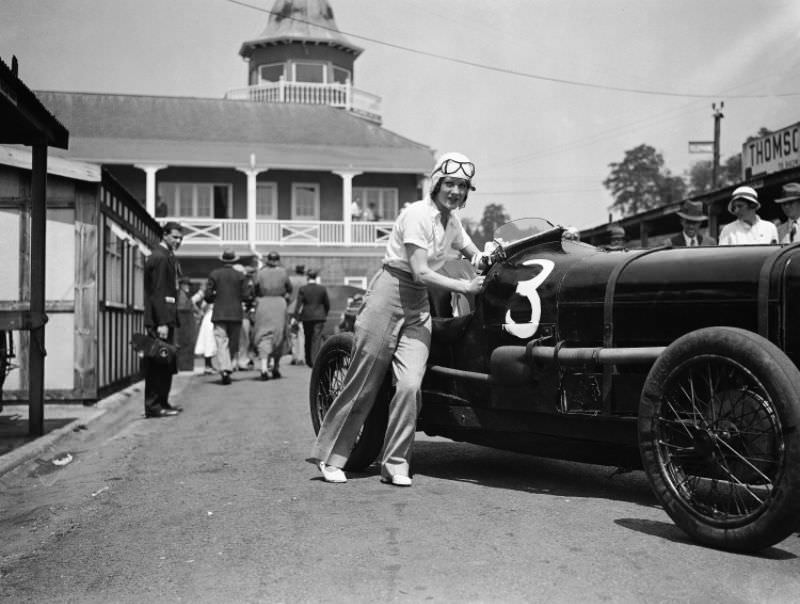
Leaning into the weight of her racer, Miss Paddy Naismith pushes the car toward the Brooklands track, sleeves rolled and goggles perched ready for action. The bold number “3” painted on the bodywork and the long, purposeful lines of the machine place the viewer right in the thick of pre-war motorsport, where speed was as much about grit and preparation as it was about the run itself.
Behind her, spectators and officials in suits and hats drift through the paddock area, while the distinctive Brooklands buildings loom with balcony railings and a control-room-like tower. It’s a candid slice of race-day routine: no posed glamour, just the practical business of getting a stubborn, heavy vehicle into position—an evocative reminder that early racing often demanded muscle as well as nerve.
As part of the story of the female racing drivers associated with the Brooklands Automobile Racing Club in the 1930s, this June 1933 scene highlights how women claimed space in a sport that liked to present itself as exclusively masculine. For readers interested in Brooklands history, vintage racing cars, and women in motorsport, the photograph offers a grounded, human moment—one that bridges the romance of the era with the real work that powered it.