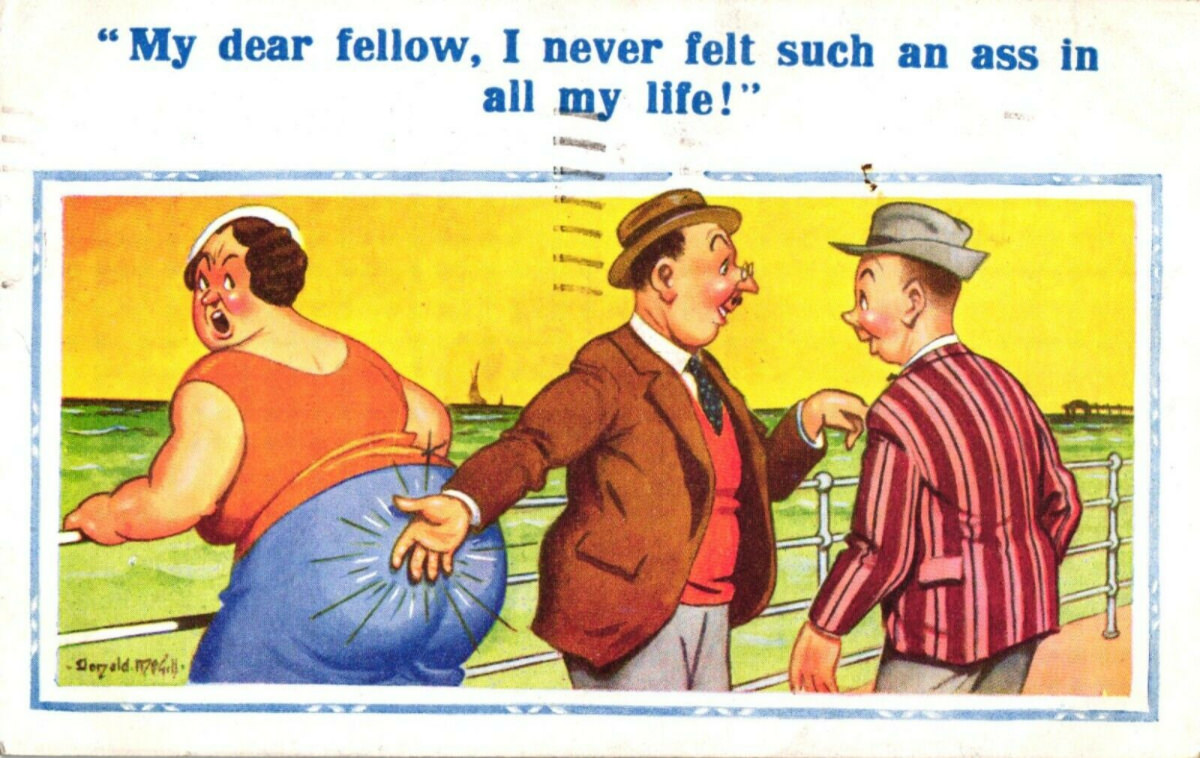
A loud caption at the top—“My dear fellow, I never felt such an ass in all my life!”—sets the tone for the broad, cheeky humor associated with Donald McGill’s early 1900s comic postcards. In the scene below, a stout woman in a sleeveless red top and blue skirt stands at a seaside railing, while two men in hats and jackets lean in mid-conversation, their rosy cheeks and exaggerated expressions rendered in bright, playful color. The joke hinges on slapstick mishap and innuendo, with the artist’s bold outlines and caricatured proportions doing as much work as the line of dialogue.
Donald McGill’s postcard art belonged to a booming popular culture of printed gags—small, affordable “artworks” meant to be bought, laughed at, and shared. The setting suggests a promenade by the water, complete with railings, distant boats, and a sunny horizon, placing the characters in a familiar leisure space where everyday etiquette could be comically upended. It’s a window into how humor circulated in the early twentieth century: quick to read, easy to mail, and designed to land a punchline at a glance.
Viewed today, these hilarious comics featuring the “fat lady” also reveal period attitudes toward body shape, gender, and public embarrassment, all filtered through the exaggeration of caricature. That tension—between lively visual storytelling and the stereotypes the gag relies on—is part of what makes McGill’s postcards such a talked-about corner of vintage illustration. For collectors and casual readers alike, this piece offers a vivid example of early 1900s humorous art, where color, composition, and a single audacious sentence combine into an instantly memorable joke.