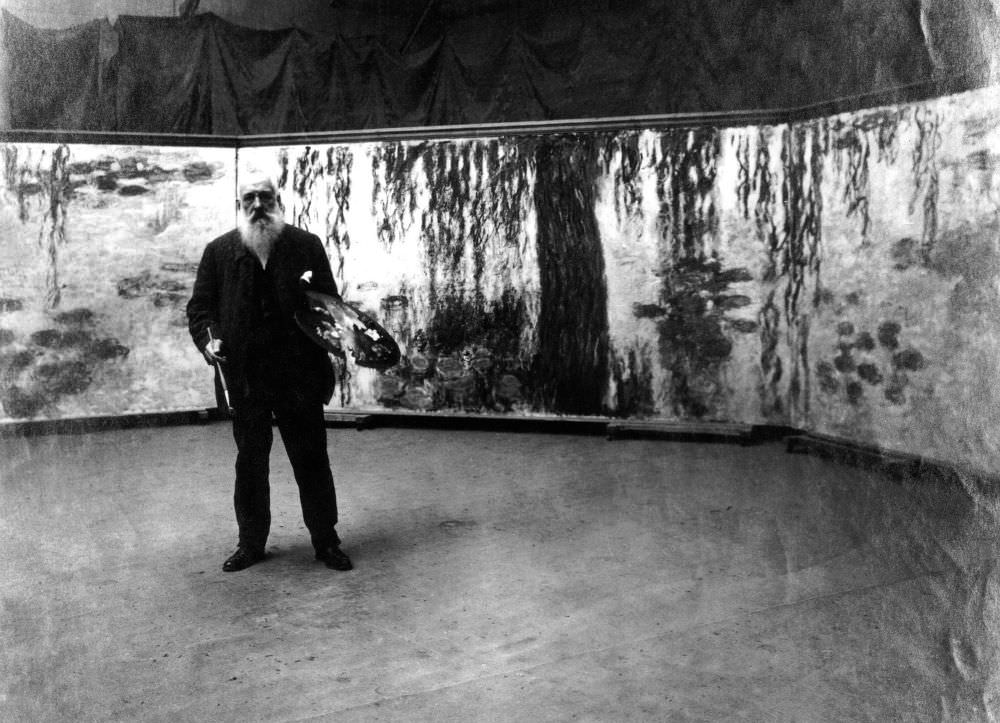
Inside a cavernous studio space, an elderly bearded painter stands with palette and brushes in hand, dwarfed by sweeping canvases that curve around the room like a panorama. The walls are alive with loose, rhythmic marks—hanging branches, dark trunks, and a haze of water and foliage that suggests the garden motifs so closely tied to Giverny. Even in monochrome, the scale and gesture hint at immersive works meant to surround the viewer rather than sit politely within a frame.
The scene speaks to Claude Monet’s habit of turning lived landscape into a controlled, repeatable world of light and reflection. Those broad panels read like studies from a personal Eden: trees trailing toward water, shadowed depths, and soft passages where atmosphere becomes the subject. In this studio, the garden is no longer merely outside; it has been carried indoors and expanded until painting feels architectural, an environment built from brushstrokes.
For readers drawn to Monet, Impressionism, and the legacy of Giverny, this historical photograph offers a rare sense of process—art not as a finished masterpiece on a museum wall, but as a working space filled with ambition and experimentation. It’s an evocative companion to discussions of Monet’s studio practice and garden-inspired artworks, showing how place, memory, and meticulous observation could merge into the monumental cycles that define his later years.