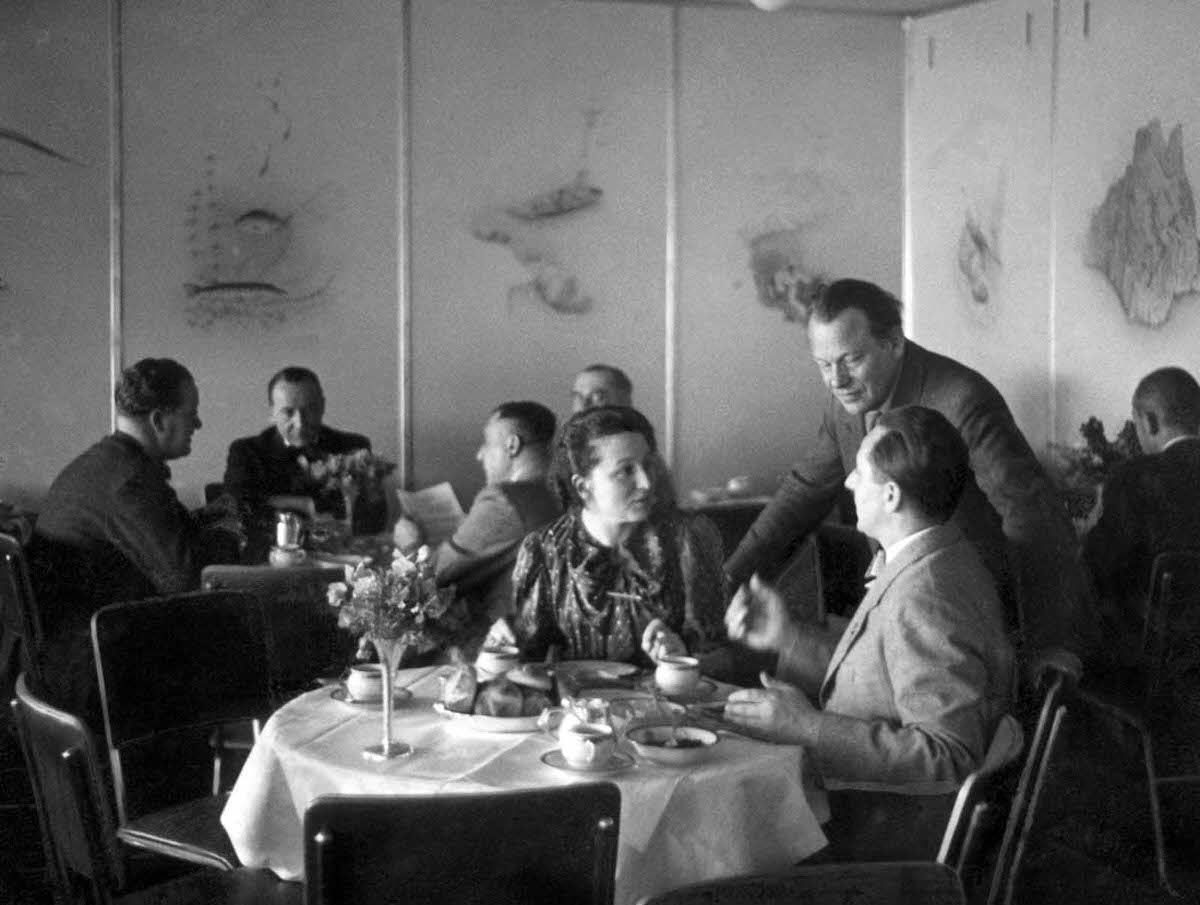
Conversation and clinking china fill the Hindenburg’s dining room in April 1936, where passengers sit at neatly dressed tables under softly lit wall panels. A steward leans in to serve or listen, while men in suits and a well-dressed woman at the foreground table create the unmistakable atmosphere of a floating hotel. Floral centerpieces, cups and saucers, and carefully arranged place settings underline how seriously luxury airship travel presented itself in the interwar years.
What stands out is the calm normalcy: people talk, read, and dine as if they were in a fashionable restaurant rather than suspended in a vast zeppelin. The room’s clean lines and restrained décor suggest modern design tastes of the era, emphasizing comfort without excessive ornament. Small details—folded napkins, teapots, and the close spacing of tables—hint at both the ship’s limited interior footprint and the effort to make every meal feel first-class.
Seen today, this Hindenburg interior photo offers more than nostalgia; it’s a window into the ambitions of early passenger aviation and the inventions that made long-distance airship travel possible. The scene captures a moment when flight promised elegance as well as speed, with service, etiquette, and engineering working together to create an experience unlike any other. For readers searching for Hindenburg dining room images, zeppelin passenger life, or 1930s airship travel history, this snapshot preserves the human side of a famous machine.