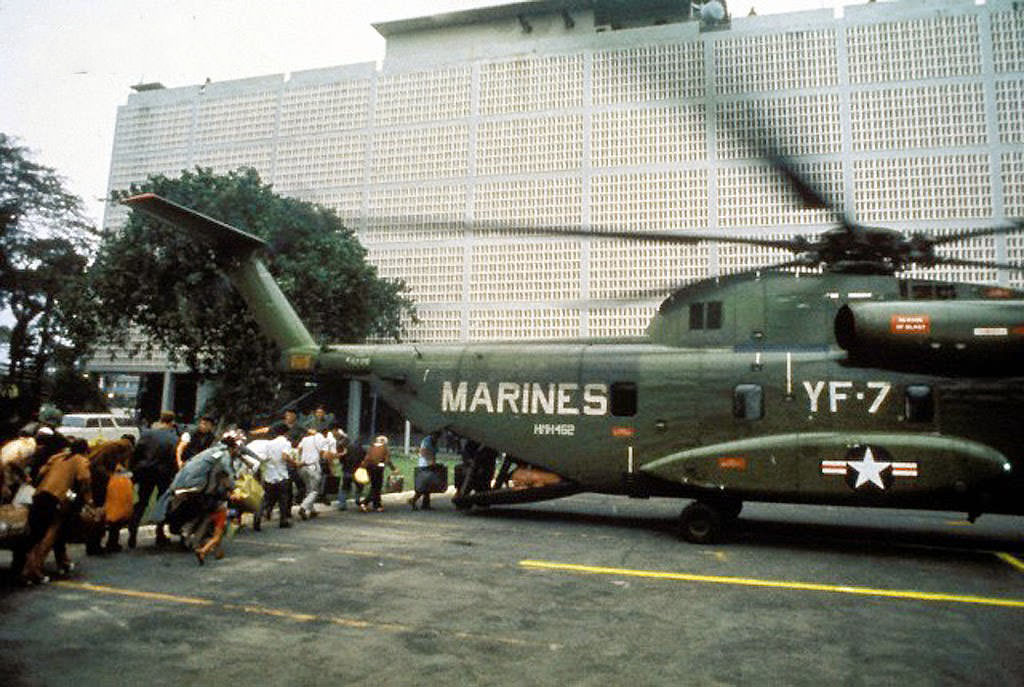
Rotor wash blurs the spinning blades as a U.S. Marine helicopter squats low inside the U.S. Embassy compound, its fuselage stamped with “MARINES” and the familiar U.S. star-and-bar. Civilians surge forward in a tight knot, running across the pavement toward the open side door, clutching small bags and whatever they can carry. Behind them rises a stark, high embassy wall, turning the scene into a corridor of urgency where every step matters.
What makes the moment so gripping is the collision of ordinary bodies and military machinery: people in everyday clothing funneled into a procedure built for speed, not comfort. The helicopter’s tail and landing gear anchor the frame while the crowd bends and leans into the wind, faces turned toward the only clear route out. It’s a snapshot of evacuation under pressure, when lines collapse into motion and the boundary between safety and danger feels paper-thin.
In the larger story of the Vietnam War, images like this have come to symbolize the frantic final hours before Communist troops entered Saigon and the last major American evacuations began. The title’s mention of a helilift to the U.S. Seventh Fleet points to the offshore destination that many hoped would mean survival and a new start, even as the ground situation tightened by the hour. For readers searching “Saigon evacuation,” “U.S. Embassy helicopter,” or “US Marines Vietnam War,” this photograph offers a visceral, street-level view of departure—tense, crowded, and unmistakably historic.