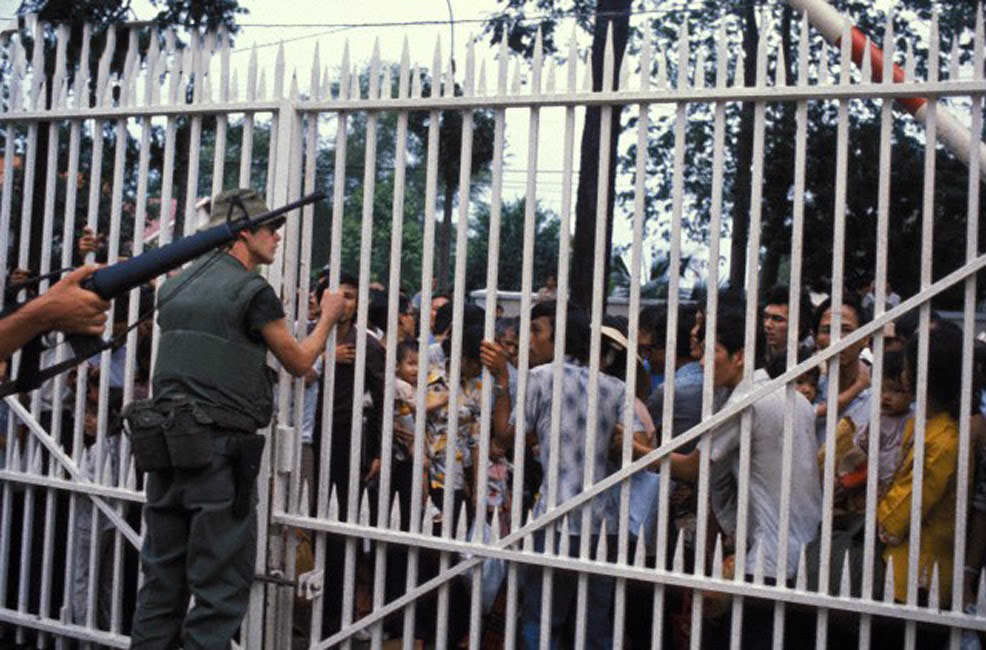
Tension crowds the frame at the American Embassy’s tall, white metal gate, where a U.S. Marine braces himself and grips the bars while a rifle points in from the left. On the other side, South Vietnamese civilians press forward shoulder to shoulder, hands threaded through the fence, faces turned toward the uniformed guard. The closeness of bodies to steel—fingers wrapped around spikes, arms reaching through narrow gaps—makes the scene feel less like a checkpoint than a last barrier between danger and escape.
Behind the fence line are men in short-sleeved shirts, a woman in bright clothing, and children pushed upward to be seen, all telegraphing urgency without a single word. The Marine’s posture suggests both restraint and strain, tasked with holding order as the crowd pleads for entry into the compound. In moments like this, the Vietnam War becomes something painfully intimate: not an abstract conflict, but a crush of human choices made at arm’s length.
The title’s reference to evacuation by helicopter evokes the chaotic endgame of Saigon, when the U.S. Embassy became a focal point for desperate hopes and shrinking options. Photographs like this endure because they show the war’s final chapter in stark, physical terms—gate, guards, and a crowd betting everything on being admitted. For readers searching Vietnam War history, U.S. Marines at the American Embassy, or the experience of South Vietnamese civilians during the fall of Saigon, this image offers a haunting window into the uncertainty of those final hours.