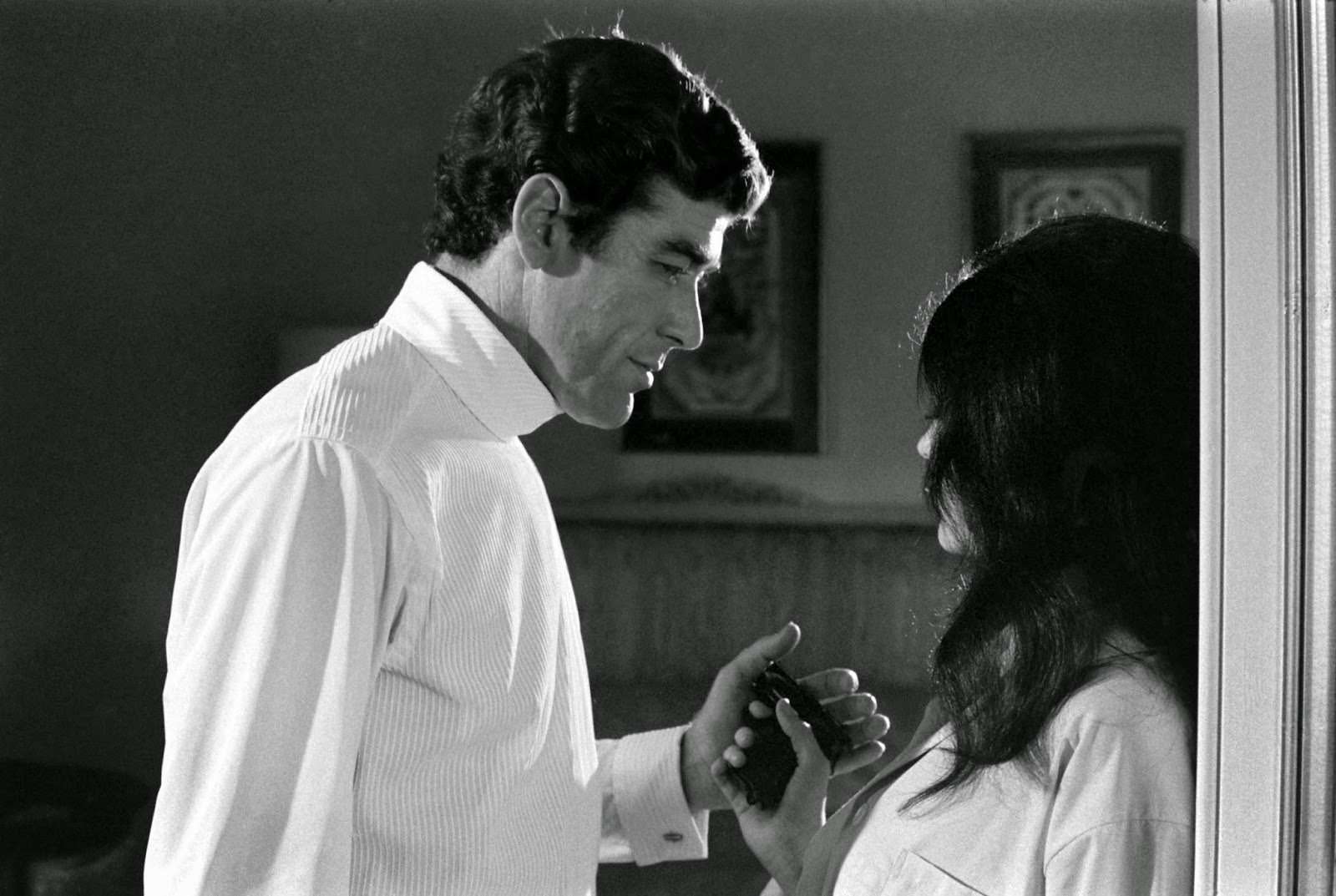
Anthony Rogers leans in with the measured intensity that screen tests are designed to catch, his crisp, high-collared shirt and controlled posture reading as carefully as any line delivery. Opposite him, an actress—partly veiled by thick, dark hair—holds his attention at close range, creating a charged, intimate frame that feels both rehearsed and strangely private. The black-and-white lighting sharpens their profiles and turns a simple exchange into something cinematic, where a pause can matter as much as dialogue.
Screen tests in 1967 were more than auditions; they were chemistry experiments for the camera, meant to reveal how two performers shared space, breath, and momentum. The setting here is spare and interior, with framed artwork softened into the background so the focus stays on faces and hands. That small object between them, gripped and offered, becomes a prop with narrative weight—suggesting tension, trust, or a turning point, even without a script in view.
Movies and TV history is full of these in-between moments, when roles were still possibilities and careers could pivot on a single take. The photo’s close staging, naturalistic wardrobe, and quiet intensity speak to late-1960s screen acting trends that favored realism and psychological nuance. For anyone searching for classic Hollywood screen test imagery, 1960s acting portraits, or behind-the-scenes film photography, this scene preserves the craft at its most vulnerable: two performers discovering what the lens will believe.