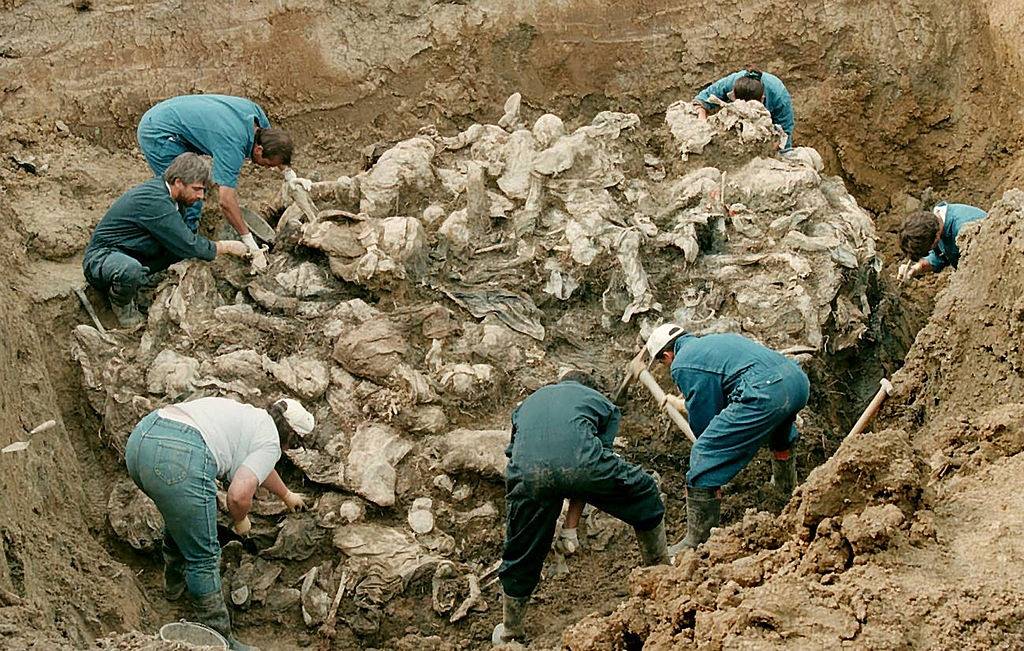
In an open earthen pit, forensic specialists work shoulder to shoulder in heavy boots and gloves, bending over a tangled mound of remains and soil. Their careful postures, small tools, and measured movements suggest the methodical pace of an exhumation, where every fragment can become evidence. The scene is grimly practical: mud, torn fabric, and pale forms laid bare against the rough wall of the grave.
The title situates the moment within the work of the International war crimes tribunal in The Hague, pointing to the painstaking process of documenting mass graves uncovered after civil war. Beyond the immediate horror lies a structured effort—recovering bodies, separating layers, and preserving the chain of proof needed for investigations and future trials. It is a reminder that justice in the aftermath of conflict often begins not in a courtroom, but in the ground.
For readers searching the history of war crimes investigations in Bosnia and the wider former Yugoslavia, this photograph underscores how forensic archaeology and human remains analysis became central to postwar accountability. It also speaks to families waiting for answers, as identification and repatriation depend on the same slow, meticulous work shown here. The image asks us to look past statistics and confront the human cost that tribunals and evidence files are ultimately trying to name.