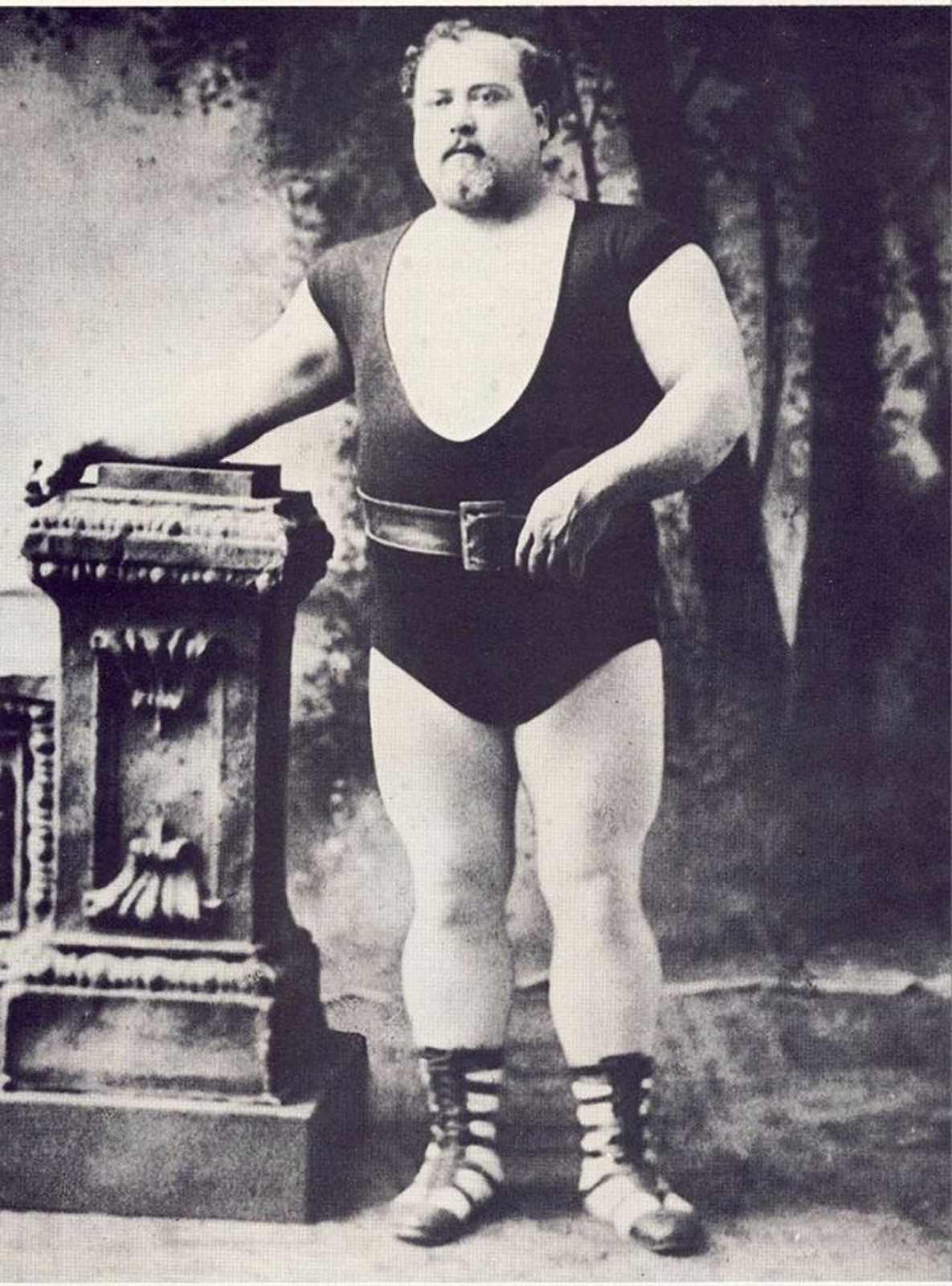
Louis Cyr stands in a studio pose that feels part athletic display, part stage performance, leaning an arm on an ornate pedestal as if it were a mere prop. The deep-cut one-piece and broad belt emphasize mass and solidity rather than the sharply defined lines prized in later bodybuilding photography, while his forward gaze and square stance sell confidence without theatrics. Even through the soft grain of the print, the image projects the culture of strength that made strongmen household names.
In the early 1900s, physical culture was still being invented in real time, and figures like Cyr helped shape what the public imagined “modern” strength could look like. Strongman portraits doubled as advertising: a carefully arranged body, a controlled posture, and just enough scenery to frame the subject as larger than life. For readers interested in the roots of bodybuilding history, this photograph sits at the crossroads of sport, spectacle, and emerging fitness ideals.
Behind the legend of the French Canadian strongman is a broader story about how athletes were photographed, promoted, and remembered before today’s gyms, supplements, and social media. The minimal setting and formal styling keep the focus on physique and presence—an approach that still echoes in contemporary strength photography. As a historical image, it’s a vivid reminder that the fascination with power, training, and human potential has deep roots in popular entertainment as well as sport.