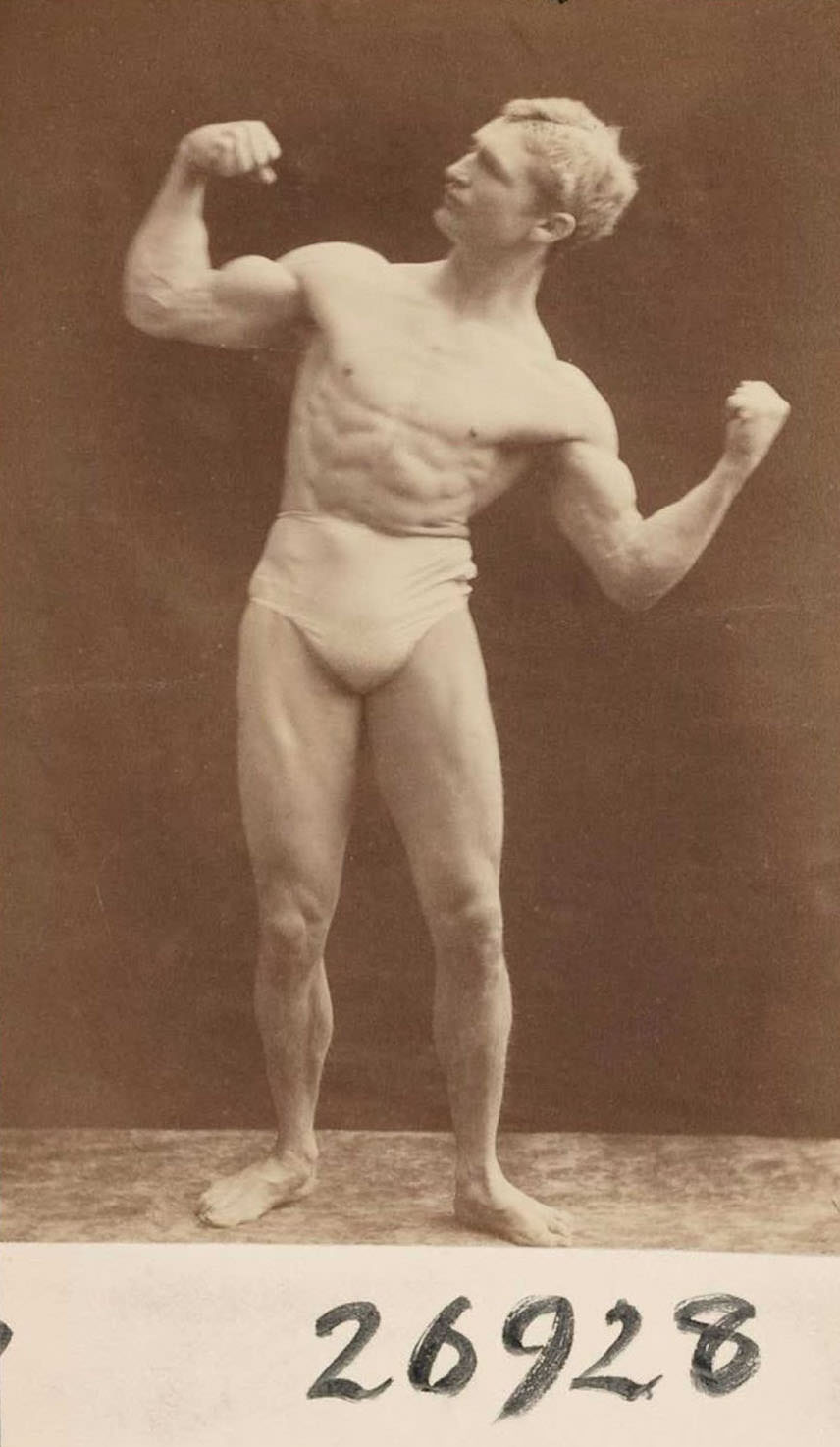
Bernarr Macfadden stands in a confident, classical pose, arms raised to frame the muscular definition of his torso and legs. The studio setting is spare and uncluttered, pushing all attention onto the physique itself—every contour emphasized by the soft, even lighting and the plain backdrop. In minimal athletic attire, he presents the body not as an afterthought to sport, but as the main subject worthy of careful display.
Taken in 1918, the portrait belongs to the early era of modern physical culture, when strength, fitness, and “bodybuilding” were becoming public ideals rather than private pursuits. Macfadden’s deliberate stance and controlled expression suggest a performance meant to educate and inspire, bridging the worlds of athletics, health promotion, and spectacle. The image’s straightforward composition also hints at how fitness photography was beginning to standardize poses and aesthetics that later generations would recognize instantly.
For readers exploring the history of bodybuilding and early 1900s sports culture, this photograph offers a striking window into how the modern body was marketed and admired. It reflects a time when the camera helped turn training into an identity, translating discipline into a visual argument for vitality and self-improvement. As a historical photo, it remains a compelling artifact of the fitness movement’s roots and the enduring fascination with strength on display.