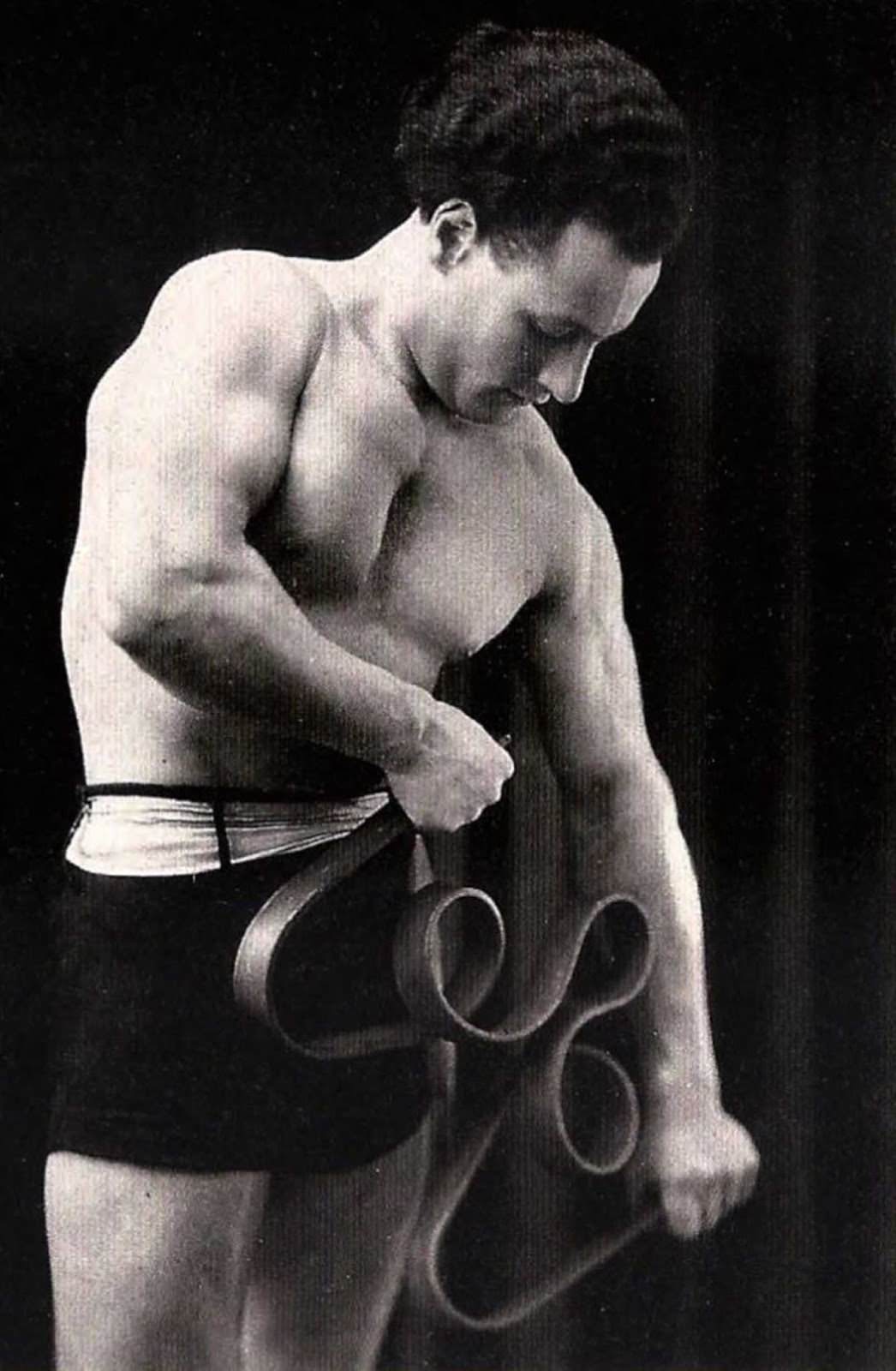
Under a stark studio backdrop, a powerful athlete leans into his work, jaw set and eyes lowered in concentration as he bends a strip of metal into looping curves. The pose emphasizes thick shoulders, forearms, and a broad chest, with a wide belt cinched at the waist—part costume, part tool of the trade—signaling the showman’s craft behind early strength feats. Even without a crowd in view, the tension in his arms makes the moment feel like a performance frozen at its peak.
Strongman acts were a major draw in the early twentieth century, when physical culture, wrestling, and vaudeville stages helped turn disciplined training into public spectacle. The bent metal becomes a prop that audiences could instantly understand: strength made visible, not merely claimed. Photographs like this one helped spread the era’s ideals of masculinity, health, and athletic achievement, bridging the gap between carnival tradition and what would soon evolve into modern bodybuilding and organized strength sports.
For readers interested in fitness history, “Strongman, 1920” offers more than a display of muscle—it hints at the methods, aesthetics, and marketing that shaped early modern bodybuilders. The simple trunks, the dramatic lighting, and the deliberate emphasis on physique speak to a time when the camera itself was part of the act, turning training into legend. As a piece of sports and physical culture history, this image remains a striking reference point for the roots of strength training and the enduring fascination with human power.