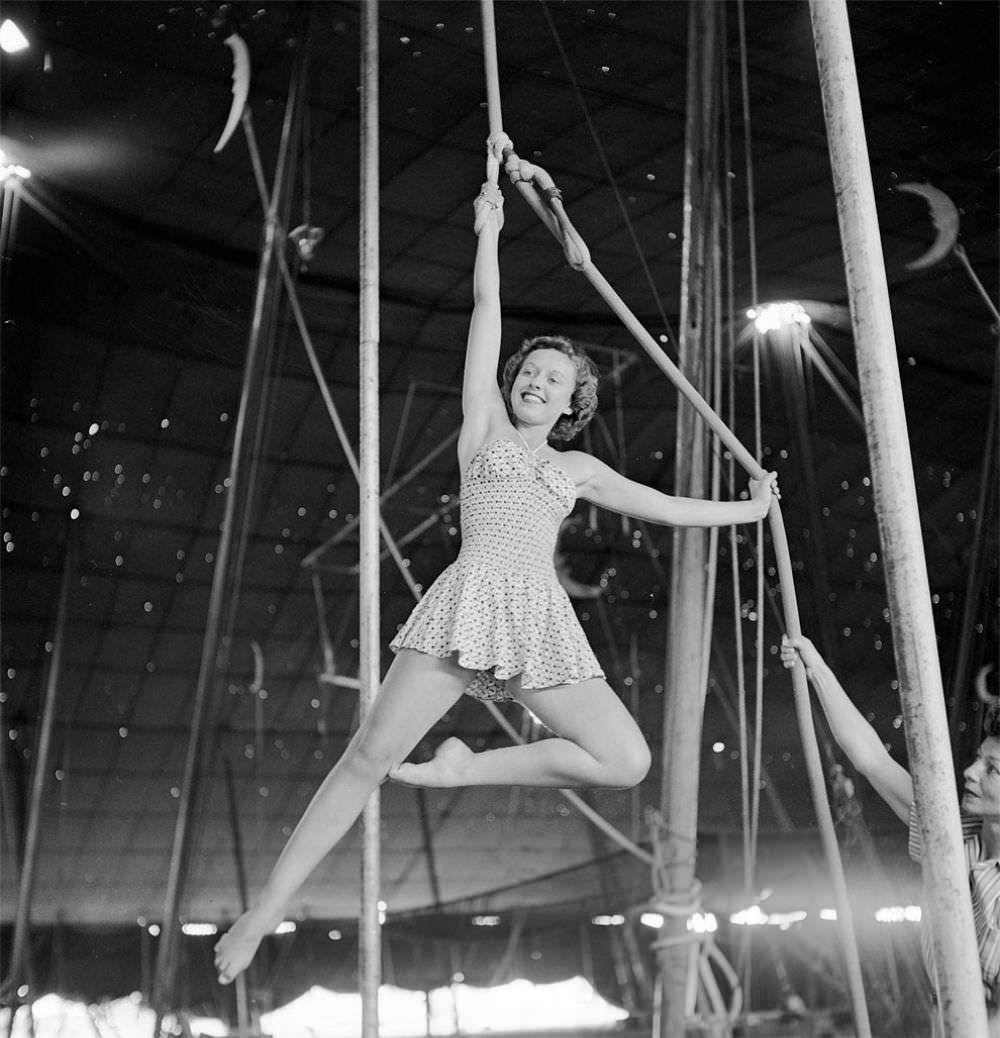
High above the circus floor, an aerialist pauses mid-rehearsal with one arm extended to the rigging, her sequined costume catching the tent lights like scattered stars. The vaulted canvas ceiling, crowded with ropes and poles, frames the moment as something between sport and theater—strength held in a smile, balance made to look effortless. It’s a vivid glimpse of 1949 circus training, where poise was part of the performance even when no audience was watching.
Down at the edge of the frame, another performer steadies a rope, reminding us how rarely these acts were truly solo. Circus work depended on trust, timing, and the quiet competence of assistants and fellow “circus girls” who managed lines, checked tension, and helped keep rehearsals moving. That shared labor—often invisible once the show began—was essential to every suspended turn and held pose.
Set in Sarasota, Florida, long associated with the Ringling Bros. and Barnum & Bailey Circus, the photo reads like a backstage postcard from America’s big-top era. For readers searching for vintage circus photos, aerialist rehearsal images, or Sarasota circus history, this scene offers a grounded look at the daily discipline behind the glamour. The camera freezes a single practiced moment, but it hints at hours of repetition, aching muscles, and the pride of making danger look like delight.