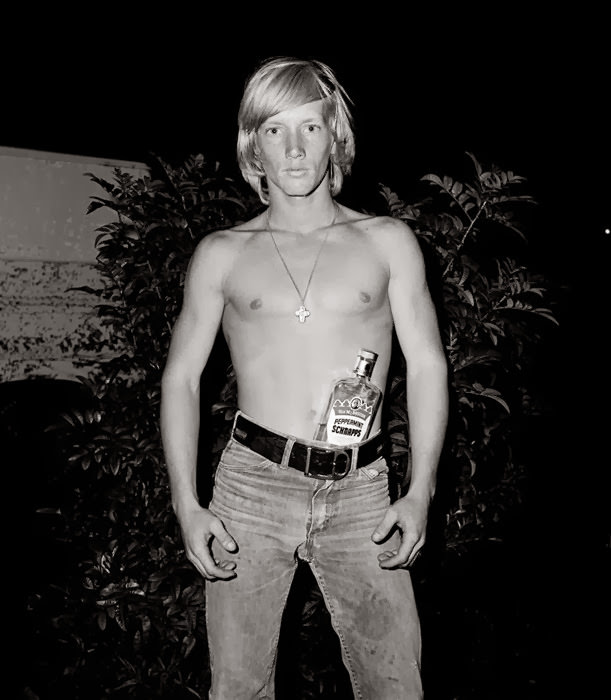
Under a hard flash against the night, a young man stands squarely to the camera with the easy bravado of early-1970s youth culture. Shirtless, wearing jeans and a simple cross necklace, he looks less like a posed studio subject than someone caught between moments—confident, watchful, and aware of being seen. The bottle tucked into his waistband becomes a blunt detail that pulls the scene toward the candid edges of nightlife and teenage performance, where style and risk often traveled together.
Set within the broader theme of “Seven Months in 1972,” the photograph reads as a character study as much as a document of a scene. Roller skating rinks were more than sports venues; they were social stages where music, fashion, and peer attention shaped identities as surely as any competition. Even without skates in frame, the attitude and presentation echo that rink-world energy—youth gathering after dark, showing off, and testing boundaries in public spaces that felt half-supervised and wholly theirs.
For readers interested in 1970s Americana, youth culture photography, or the social history orbiting roller rinks, this image offers a raw, unforgettable fragment. The stark black-and-white contrast emphasizes textures—denim, skin, foliage—and highlights how documentary photos preserve not just events but moods. As part of a post centered on the Sweetheart Roller Skating Rink and sports-adjacent life, it invites questions about community, masculinity, and the everyday rituals that made a rink night feel like the center of the world.