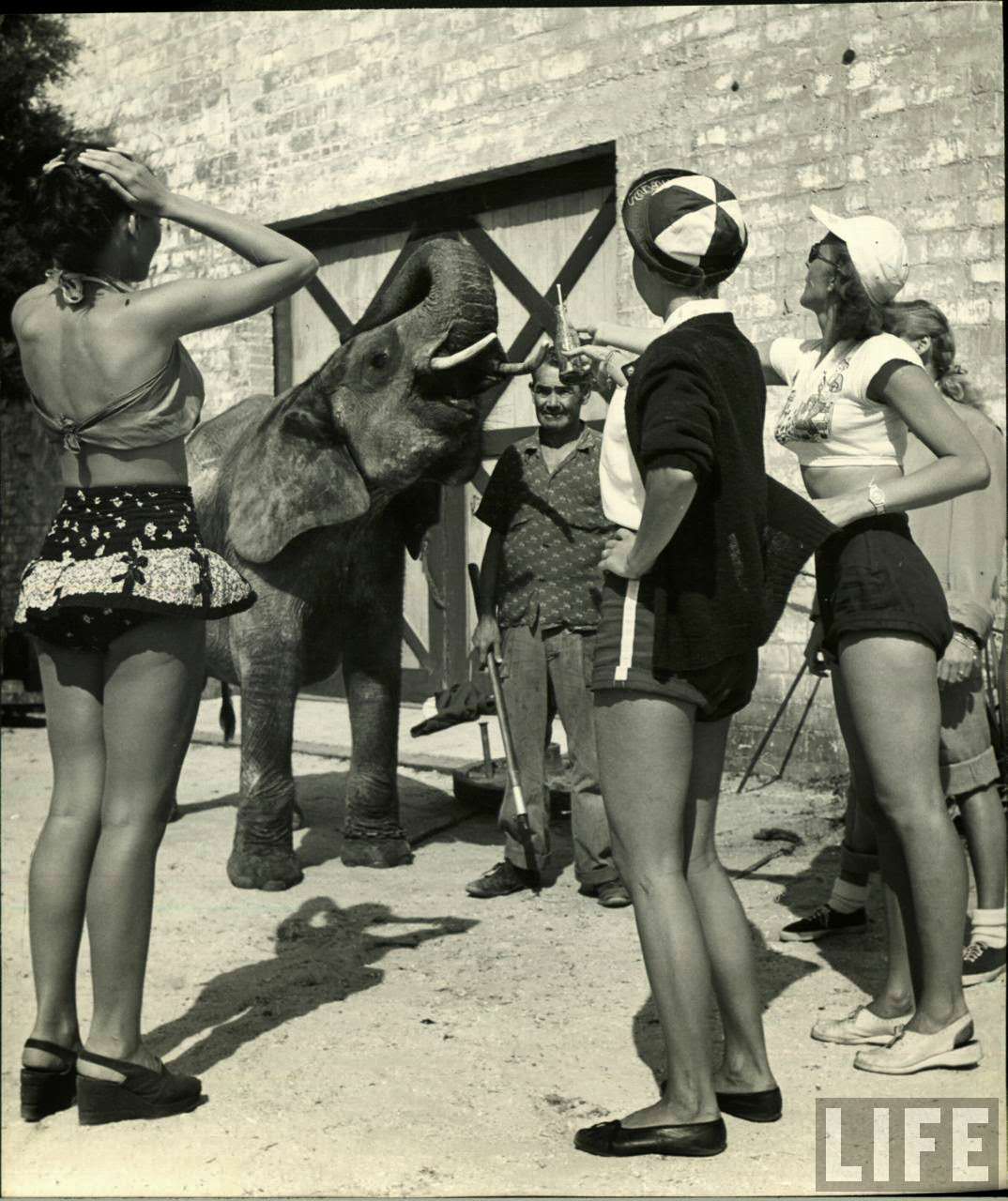
Sunlight spills across a rough brick stable wall as a small elephant lifts its trunk toward a cluster of young performers, turning an ordinary workday into a moment of show-business mischief. The women’s practice outfits—shorts, halters, and sturdy shoes—hint at the athletic grind behind the glamour, while the animal’s alert posture suggests the quick trust and routine familiarity of circus life. In the background, a handler stands watchful, grounding the scene in the practical realities of caring for animals between performances.
Sarasota’s mid-century circus culture wasn’t only about the big top; it was built in yards, barns, and training spaces where performers learned timing, balance, and nerve the hard way. Here, the “circus girls” read less like posed starlets and more like working athletes, confident in their bodies and unafraid to get close to a powerful animal. The photo’s casual grouping—half conversation, half training—captures the unguarded rhythm of daily life that audiences rarely saw.
For readers drawn to vintage circus photos, women in sports history, or Florida’s entertainment heritage, this image offers an intimate slice of 1949-era behind-the-scenes labor. It highlights the blend of camaraderie, discipline, and risk that defined acrobat performers and their crews, far from the spotlight. Look closely and you can almost hear the dust underfoot, the laughter, and the steady routines that kept a traveling spectacle alive.