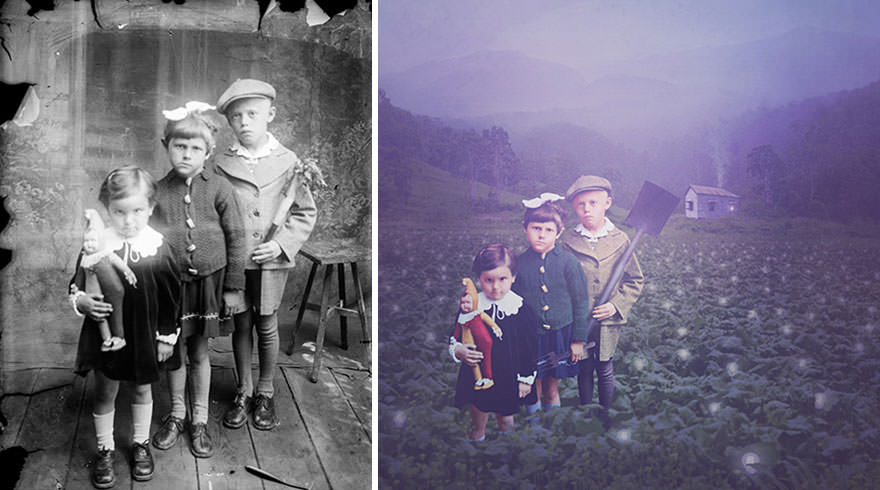
Three children stand close together in a formal studio pose, their serious expressions and carefully chosen clothes hinting at how expensive and momentous a glass-plate portrait could be. The youngest clutches a doll, while the older pair anchor the composition with stiff posture and heavy shoes, framed by a painted backdrop and the plain wooden floorboards beneath them. Even before any color enters the scene, the textures—fabric, hair ribbons, worn edges, and the faint marks of age on the plate—carry a quiet intimacy that’s easy to miss at first glance.
On the recolorized side, the photographer’s conceptual approach shifts the mood from strict portraiture to something more dreamlike and narrative. The trio is transplanted into an open field under a violet haze, with soft mountains rolling behind them and a small house sitting at a distance like a memory. Gentle tones in skin, clothing, and landscape don’t simply “restore” the past; they reinterpret it, turning an archival likeness into a poetic scene that invites viewers to imagine the air, the season, and the silence around them.
What makes this kind of historic photo colorization so compelling is the tension between documentary detail and artistic imagination. Glass-plate photography offers sharp faces and enduring presence, while modern recoloring adds atmosphere, emotion, and storytelling that black-and-white can leave to the viewer. In this post, the pairing highlights how recolor work can deepen our connection to vintage portraits—less as museum objects, and more as lived moments reintroduced to the present.