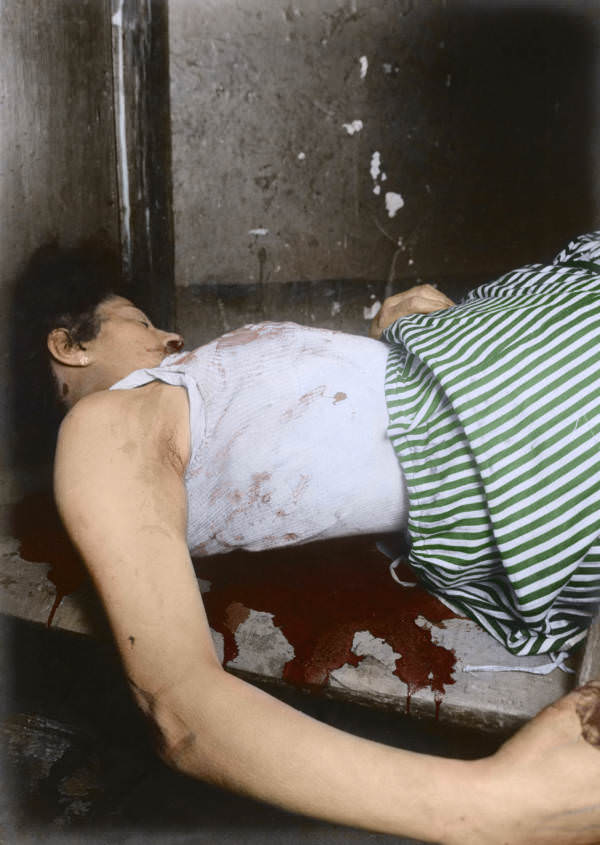
A stark interior scene from France in 1930 confronts the viewer with the unvarnished reality of a crime scene: a body lies slumped on the floor, one arm outstretched, clothing disheveled, and dark staining pooling nearby. The cramped space—bare walls, hard edges, and the sense of a threshold or corner—adds to the claustrophobic tension, as if the room itself has become evidence. In the absence of context, the photograph’s power comes from what it refuses to explain, leaving only the immediate aftermath and the silence around it.
Colorization shifts the image from distant record to unsettling proximity, drawing the eye to skin tones, fabric textures, and the contrast between the patterned garment and the grim surroundings. The added color makes the scene feel less like an artifact and more like a moment that could happen in any era, challenging the protective barrier that monochrome history often provides. Details that might fade in black and white—creases in cloth, smears on the floor, the wear of the room—become sharper, almost forensic.
As a historical photograph, it also hints at the period’s evolving relationship with policing, documentation, and the public appetite for sensational news in the early twentieth century. French crime imagery from this era often straddled the line between official record and media spectacle, preserving harsh truths while shaping narratives about danger and modern life. For readers interested in true crime history, vintage forensic photography, and the ethics of viewing, this post offers a sobering window into how violence was captured—and remembered—in 1930s France.