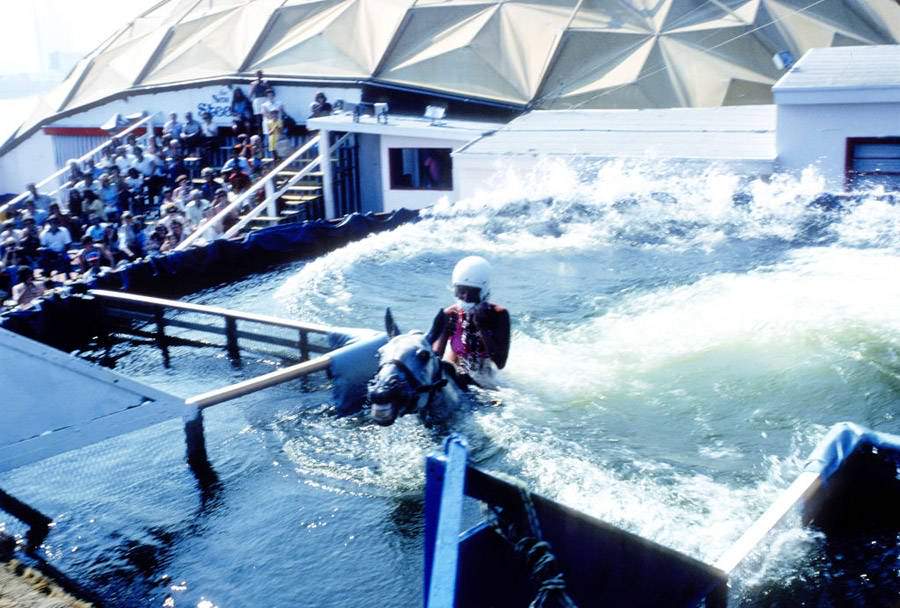
Water still churns in the pool as a helmeted diver guides a soaked horse toward the exit ramp, the animal’s head just above the surface while foam and spray roll behind them. In the background, rows of spectators press in along the railing, their attention fixed on the tense transition from splashdown to safety. The scene, dated 1977 in the post title, preserves the split second when spectacle gives way to careful handling and control.
Horse diving shows once marketed themselves as daring family entertainment, blending stunt work, animal training, and aquatic theatrics in a way that feels startling to modern eyes. The diver’s protective gear and the improvised architecture of platforms, gates, and walkways hint at the hazards involved—strong currents, slippery footing, and the sheer unpredictability of an animal in deep water. Even without naming a venue, the crowded stands and purpose-built pool speak to a popular attraction designed for maximum visibility.
As a piece of sports and performance history, the photo invites a wider conversation about changing standards in live entertainment and animal welfare. The onlookers’ faces are turned toward the exit, not the leap, suggesting that the aftermath could be as dramatic as the stunt itself. For readers searching for a 1970s horse diving show image, this moment captures the era’s appetite for risk—and the careful choreography required to bring both diver and horse back out of the pool.