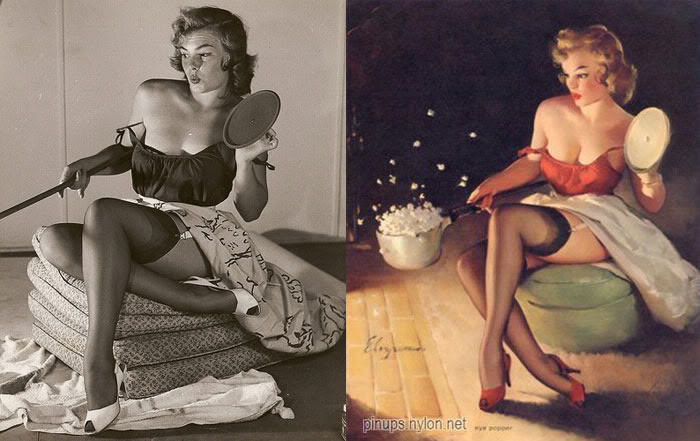
Glamour and workmanship meet in this side-by-side look at a pin-up model and the finished painting inspired by her pose. On the left, a studio photograph reveals the practical setup behind the fantasy: a woman perched on stacked cushions, holding a hand mirror, lit to emphasize the curves and folds that artists relied on for believable anatomy. The styling—lingerie, stockings, heels, and carefully arranged fabric—signals the mid-century pin-up aesthetic where everyday objects and intimate gestures became part of a polished visual story.
Set against that reality, the artwork on the right transforms the same figure into a more theatrical scene, with richer color, softened features, and a carefully staged environment. The hand mirror remains, yet the mood shifts from studio documentation to an idealized moment, complete with props and a more cinematic sense of lighting. Comparing the two highlights the “before and after editing” process long before digital tools: retouching through paint, selective emphasis, and the artist’s ability to turn a working reference photo into an incredibly beautiful illustration.
Behind every classic pin-up image were real women, real sessions, and the careful collaboration of photographer, model, and illustrator. Posts like this help readers understand how pin-up art was constructed—how poses were engineered, how expressions were refined, and how the final image balanced realism with fantasy to fit the era’s popular taste. For anyone searching for vintage pin-up models, classic illustration process, or the history of glamour photography and painted pin-ups, this comparison offers a revealing glimpse at the craft behind the iconic look.