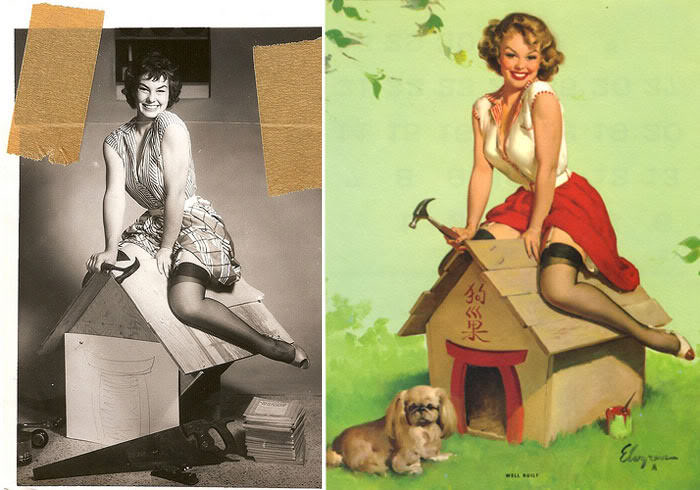
Side by side, the source photograph and the finished pin-up painting reveal how much alchemy went into classic commercial art. On the left, a smiling model poses in a studio setting, perched playfully on a simple prop while practical details—tape at the corners, stacked materials, and the honest lighting of the room—keep the scene grounded in reality. On the right, that same pose is transformed into a bright, polished illustration, where softer contours, vivid color, and a staged outdoor backdrop turn a working reference into a fantasy moment designed to charm at a glance.
What feels effortless in the final artwork is the product of careful editing: posture refined, proportions subtly idealized, and textures simplified into confident brushwork. The painted version swaps the studio’s utilitarian props for a storybook setting, adding cheerful scenery and cute narrative touches that would have been perfect for calendars, magazine ads, and mid-century décor. Comparing “before and after” in this way makes it easier to see how illustrators and art directors shaped a recognizable pin-up aesthetic—one that blended realism with an aspirational, upbeat mood.
Behind the glossy finish sits a real woman holding a pose for the camera, doing the quiet labor that made “incredibly beautiful paintings” possible. Posts like this invite a more nuanced look at vintage pin-up models and retro illustration, not just as nostalgia, but as a window into how beauty standards, print culture, and commercial design worked together. If you’re drawn to history, art process, or classic pin-up artwork, these contrasts offer a fascinating reminder that every iconic image started with an ordinary room, a willing subject, and an artist’s eye for transformation.