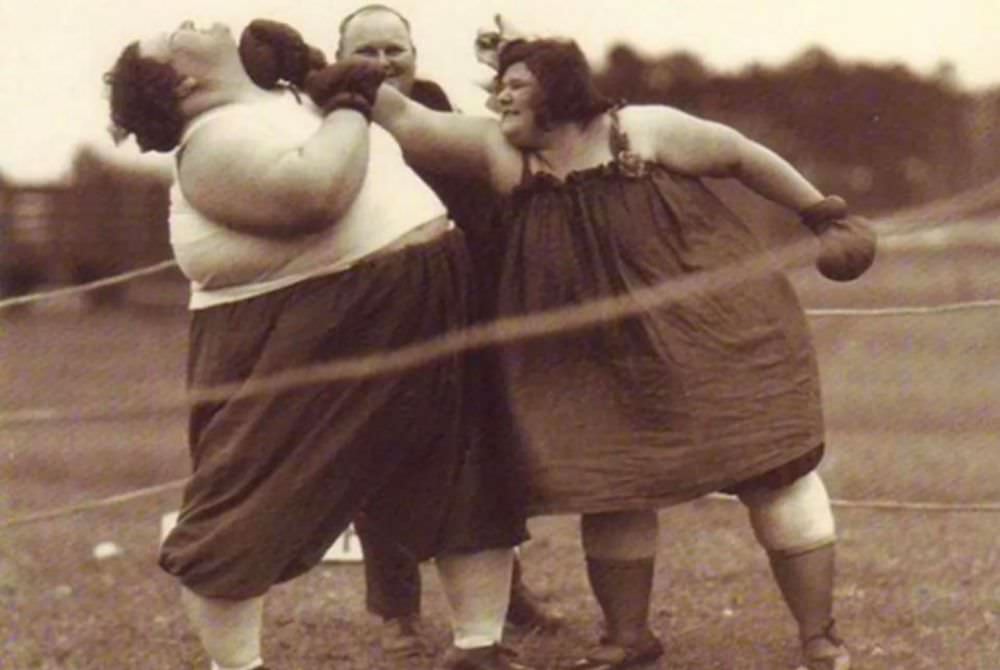
Gloves collide mid-swing as two women trade punches inside a simple roped-off ring, the action caught at the exact moment one fighter’s right hand lands while the other’s head snaps back. Their outfits—loose, practical garments rather than modern athletic wear—underscore an era when women’s boxing lived on the margins, staged where it could draw a crowd without much official notice. A third figure hovers close behind them, suggesting a referee or handler keeping order as the bout surges forward.
What makes this scene compelling is how unpolished and immediate it feels: grass underfoot, blurred spectatorship beyond the ropes, and the fighters’ expressions locked in determination rather than spectacle. The undisclosed location adds to the mystery, but the message is unmistakable—female prize fighters were not a novelty posed for the camera; they were athletes willing to absorb and deliver real blows. In a time when many expected women to remain restrained and decorous, the ring offered a rare public arena for strength, grit, and showmanship.
For readers interested in the history of sports and women’s athletics, this photograph opens a window onto early women’s boxing and the culture that surrounded it. The image invites questions about who organized such matches, how audiences reacted, and what these fighters hoped to gain—money, notoriety, or simply the right to compete. It’s a vivid reminder that the story of boxing has always included women, even when the record keeps their names and places frustratingly out of view.