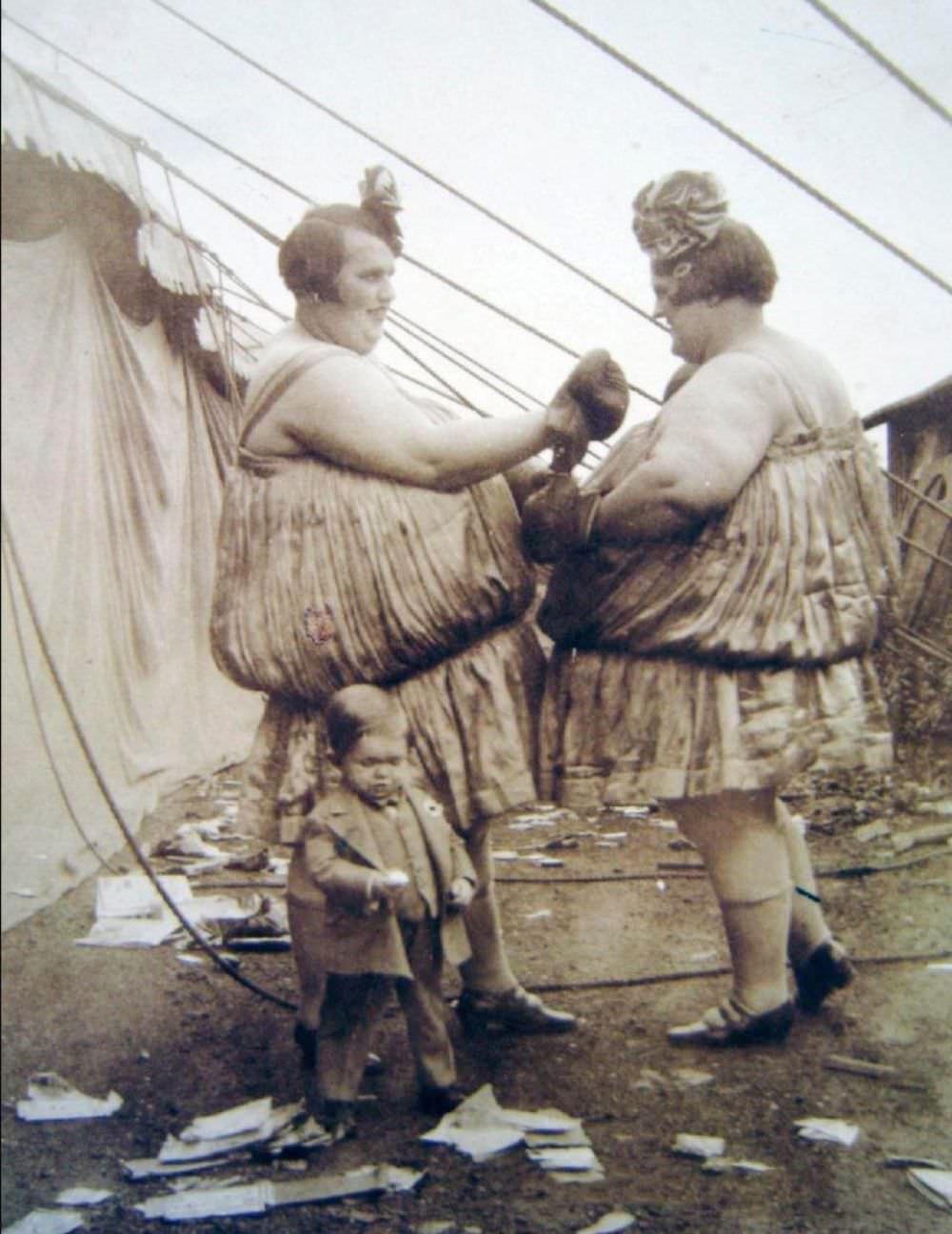
Under the sagging lines of a big-top tent, the Carlson Sisters square off with gloved hands raised, their fringed performance dresses swinging as they shift their weight like seasoned show fighters. The scene—set in the rough, cluttered ground behind the canvas—feels more like the working side of the circus than the polished ring, a reminder that entertainment in 1920s America was built on constant travel, quick set-ups, and audiences hungry for novelty.
Rather than presenting women’s boxing as a formal sport, this sideshow act leaned into spectacle, billed as “fat twins” who could spar and even box for paying customers. Their posture suggests practiced choreography: part comedy, part challenge, and part genuine athletic display, packaged for a midway crowd. In an era when female prizefighting existed on the margins, performers like these navigated tight cultural boundaries—invited to amaze, mocked for difference, yet undeniably in control of the moment.
A small child in a coat stands near their legs, an almost jarring detail that pulls the viewer from performance to lived reality. That quiet figure hints at the blurred lines between family life, labor, and public amusement that defined many touring circus and carnival communities. For readers interested in vintage circus history, early women’s boxing, and American sideshow culture, the Carlson Sisters’ photograph preserves a complicated snapshot of resilience, exploitation, and showmanship circa 1925.