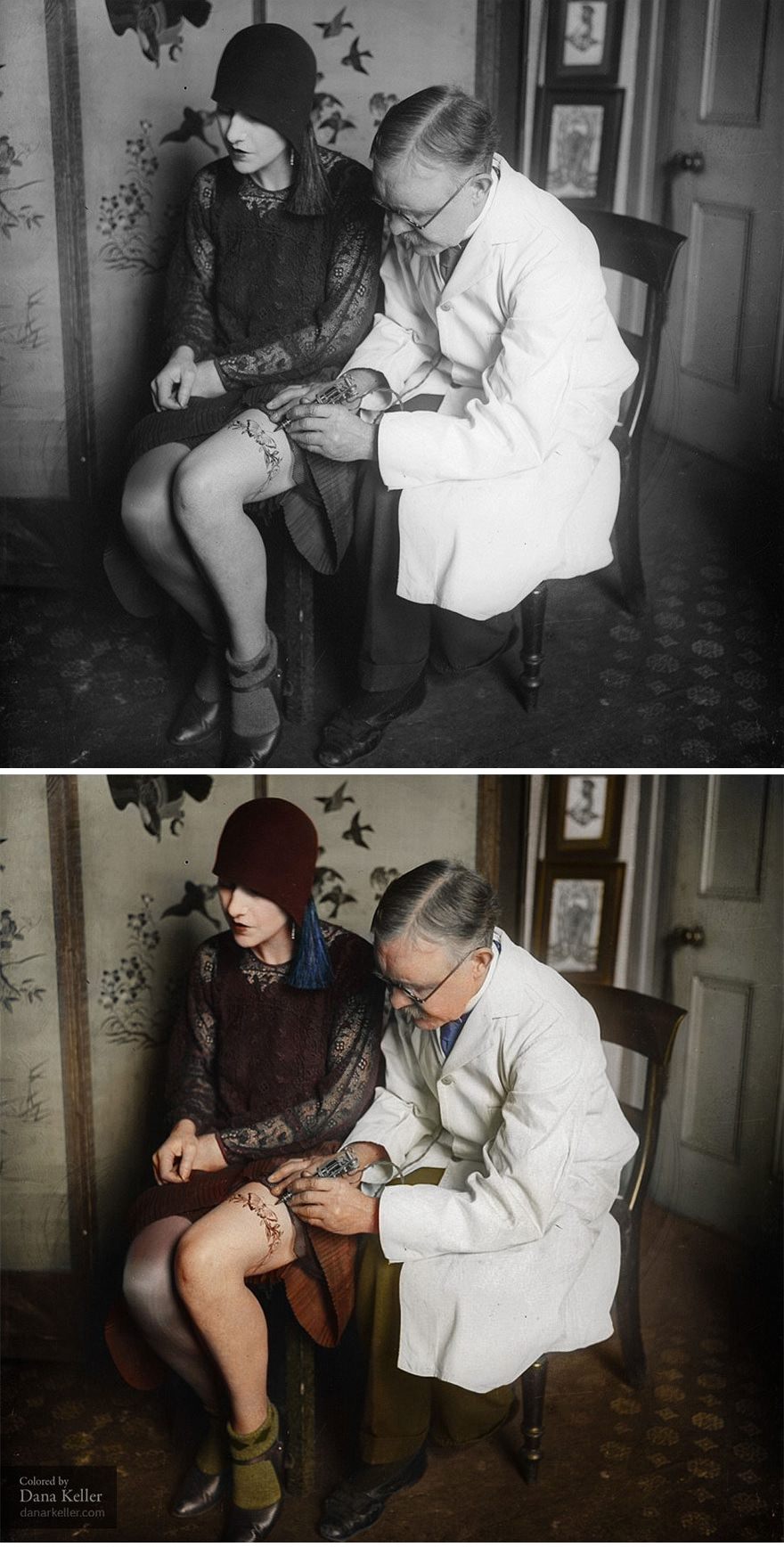
Leaning in with a steady, practiced focus, British tattoo artist George Burchett works at a client’s thigh while she sits poised in a cloche hat and lace dress, her posture calm and composed. The title’s nickname, “King of Tattooists,” feels less like exaggeration when you notice the clinical white coat, the careful grip on the tattoo machine, and the quiet, professional intimacy of the moment. Framed like a studio portrait, the scene doubles as an advertisement for skill and discretion at a time when tattooing was moving from the margins toward modern respectability.
Details in the room add to the story: patterned wallpaper with birds in flight, a simple wooden chair, and framed artwork on the wall suggesting a workspace that blends craft with display. The emerging design—fine lines and ornamental flourishes—hints at the popular tastes of the era, when decorative motifs were often chosen to complement fashion rather than shout for attention. Even without a clearly readable shop sign or address, the photograph speaks to the early 20th-century tattoo studio as a place where technology, artistry, and personal style met.
Colorization invites a fresh look at this circa 1930 image, sharpening the contrast between the artist’s crisp coat and the rich, dark tones of the client’s outfit. It also helps modern viewers imagine the textures—fabric, skin, ink, and metal—making the historical scene feel immediate rather than distant. For readers interested in George Burchett, tattoo history, or the evolution of body art in Britain, this picture offers an unusually candid glimpse of the “King of Tattooists” at work.