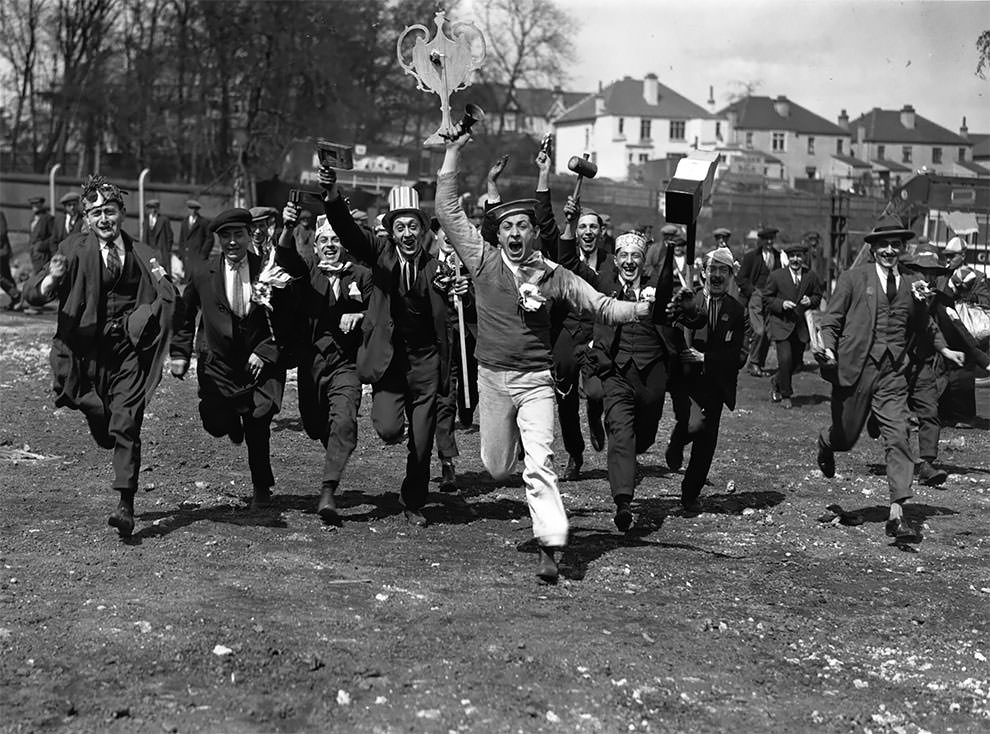
A surge of West Ham United supporters comes charging toward the camera on their way to Wembley, London, turning the approach to the stadium into a joyful sprint. Flat caps and suits mingle with improvised hats, while grinning faces and raised arms telegraph the contagious excitement of a cup-final day. One fan hoists a large trophy-shaped prop overhead, a playful declaration of confidence before a ball has even been kicked.
The scene belongs to the first FA Cup Final staged at Wembley, the landmark 1923 showdown between West Ham and Bolton Wanderers. Beyond the supporters, the open ground and nearby houses hint at how this now-mythic venue sat within everyday London life, even as it hosted an event of national attention. It’s a candid slice of early-20th-century football culture: community pride, loud optimism, and the irresistible pull of a day out at the match.
History adds its bittersweet footnote—West Ham would lose the final 2–0—but the photograph preserves the moment when hope ran ahead of the result. For readers interested in Wembley’s origins, the FA Cup’s growing prestige, or the roots of English fan culture, this image offers rich detail and atmosphere. It’s sport as lived experience, where the journey and the shared anticipation matter as much as the scoreline.