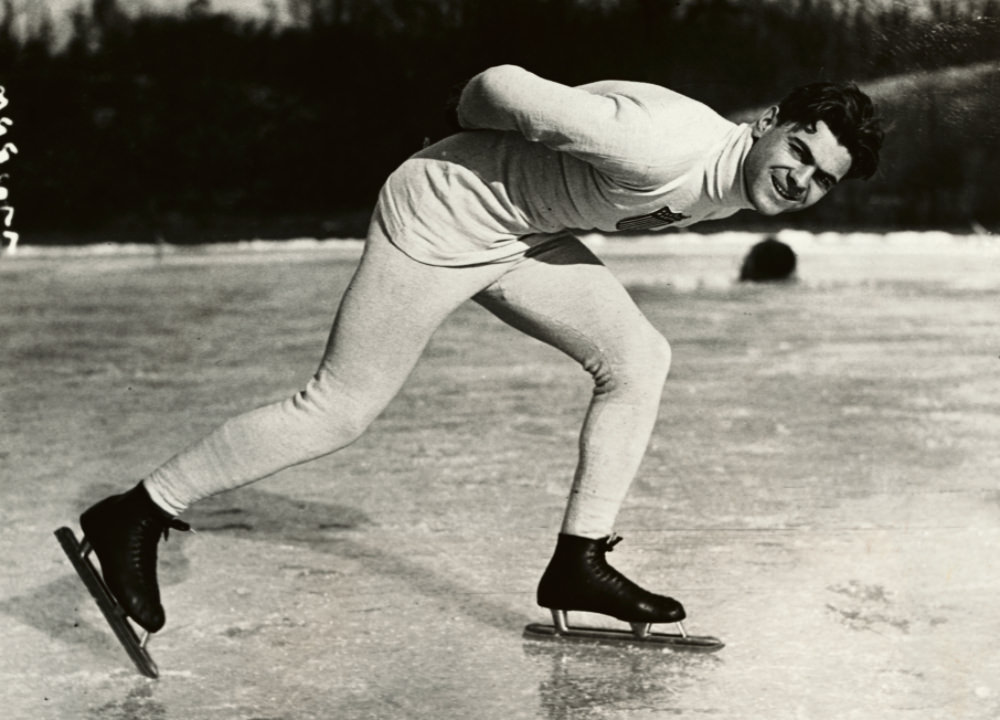
Lean and intent, the speed skater cuts across the ice with his torso pitched forward and hands clasped behind his back, a posture that speaks to the discipline of early competitive technique. The plain racing kit and sturdy skates evoke an era before flashy sponsorships, when winter sport was still defining its look on the world stage. Even in a still frame, the sense of momentum is unmistakable—blade edges biting, legs driving, and a focused glance that turns athletic effort into narrative.
At Chamonix in 1924, that drive carried Charles Jewtraw into Olympic history as the first athlete to win a gold medal at the Winter Olympics, taking the 500 meter speedskating event. The inaugural Winter Games were a proving ground for sports that had long thrived in cold climates but rarely received global attention. Jewtraw’s victory helped establish speed skating as a centerpiece of the program, linking old-world ice traditions with a new international spectacle.
Fans searching for First Winter Olympics photos, 1924 Chamonix history, or classic speed skating images will find this moment especially compelling because it captures the sport at its starting line—both literally and culturally. The composition emphasizes the solitary contest between athlete and ice, a reminder that early Olympic triumphs were often won with minimal equipment and maximum grit. As part of a broader look at historic Chamonix 1924 scenes, the image stands as a visual anchor for how the Winter Olympics began building its legend.